GLP-1 Receptor Agonists —
Who, When & Which Agent
A comprehensive clinical decision framework for GLP-1 RA prescribing across all licensed and emerging indications — covering NICE NG28 eligibility criteria, BMI thresholds, cardiovascular risk stratification, renal dosing adjustments, contraindications, special populations, and practical initiation checklists aligned to UK clinical practice in 2026.
Who Benefits from GLP-1 RAs?
Evidence-based patient profiling across indications
GLP-1 receptor agonists now carry licensed indications across five distinct clinical domains: type 2 diabetes mellitus (glycaemic management), obesity and overweight (weight management), established cardiovascular disease with obesity (CV risk reduction — SELECT indication), chronic kidney disease with T2DM (renoprotection — emerging), and metabolic dysfunction-associated steatohepatitis (MASH — tirzepatide, regulatory review). The optimal patient for GLP-1 RA therapy is not defined by a single parameter but by a convergence of clinical, metabolic, and patient-specific factors that maximise the benefit-to-risk ratio.
Clinical Decision Framework
Four questions that guide prescribing across all indications
Before prescribing a GLP-1 RA, four structured clinical questions should be answered. The answers determine indication, agent choice, dose, and monitoring requirements.
Type 2 Diabetes — Prescribing Criteria
NICE NG28 February 2026 · Treatment positioning · Drug choice
Under NICE NG28 (February 2026), GLP-1 RAs are positioned at the second-line stage of T2DM management (after metformin, or alongside metformin) and at the third-line stage (after dual therapy). However, a critical update mandates GLP-1 RAs or SGLT2 inhibitors regardless of HbA1c in patients with established atherosclerotic CVD — separating the indication into glycaemic and cardiometabolic streams.
- T2DM diagnosis confirmed · Not Type 1 or MODY
- HbA1c ≥58 mmol/mol (7.5%) despite optimised dual oral therapy (metformin + 2nd agent), OR HbA1c ≥53 mmol/mol (7.0%) with high CV risk
- BMI ≥35 kg/m² with T2DM-related comorbidity (preferred indication — strongest weight benefit rationale), OR BMI <35 with significant weight-related consequences or injectable therapy impractical
- Renal function adequate for chosen agent (eGFR ≥45 for exenatide; semaglutide/tirzepatide/dulaglutide usable at any eGFR with monitoring)
- Not pregnant or planning pregnancy
- T2DM + established atherosclerotic CVD (prior MI, stroke, PAD, or coronary revascularisation)
- Offer GLP-1 RA or SGLT2 inhibitor regardless of current HbA1c — CV benefit is independent of glycaemic effect
- Semaglutide (SUSTAIN-6, SELECT) or liraglutide (LEADER) preferred for CV indication — strongest evidence base
- SGLT2i preferred if HF or CKD co-present; GLP-1 RA preferred if weight loss is a priority or SGLT2i intolerant
- Both may be used concurrently (NICE allows combination; additive CV and renal benefits shown)
Obesity Management — Eligibility & Thresholds
Wegovy · Mounjaro · licensed indications and NICE commissioning criteria
The obesity indication in the UK operates through a separate regulatory and commissioning pathway from T2DM. Wegovy and Mounjaro are UK-authorised for weight management in eligible adults. NICE recommendations and NHS access criteria are narrower than the marketing authorisations and must be checked separately. In the UK the tirzepatide brand is Mounjaro; Zepbound is US branding.
- BMI ≥35 kg/m² OR BMI ≥30 kg/m² (≥27.5 South Asian) with ≥1 weight-related comorbidity
- No contraindications to semaglutide (see contraindications section)
- Engaged with specialist tier 2 or tier 3 weight management service providing lifestyle intervention
- Prior failed attempt at non-pharmacological weight management (6-month lifestyle programme)
- Not pregnant or planning pregnancy within 2 months (use effective contraception during treatment)
- Adequate renal function (eGFR ≥15 — caution in severe CKD; consider alternative if ESRD)
- Patient understands chronic therapy requirement — weight regain on discontinuation (STEP-4)
Cardiovascular Risk — SELECT Indication
Primary and secondary CV prevention · Established CVD with obesity
The SELECT trial (2023) established a new indication: cardiovascular risk reduction in people with established CVD and overweight/obesity, without diabetes. This is the first pharmacological weight-loss treatment licensed for primary CV event reduction, creating a new prescribing category that sits at the intersection of cardiology and obesity medicine.
- Age ≥45 years (SELECT enrolled ≥45 yr — younger patients: apply clinical judgement)
- BMI ≥27 kg/m² (overweight or obese; ≥25 for South/East Asian populations)
- Established atherosclerotic CVD: prior myocardial infarction, prior ischaemic stroke, or symptomatic peripheral arterial disease
- No diabetes mellitus (HbA1c <48 mmol/mol / <6.5% at screening) — if T2DM present, prescribe under T2DM Stream B instead
- Willing to use as chronic therapy — CV benefit requires sustained drug exposure
Visual reference for patient selection
Each illustration below is paired with a clinical summary and detailed explanation. Click any image to expand. Figures are numbered in teaching order and grouped by theme.
Decision frameworks
Patient selection algorithm
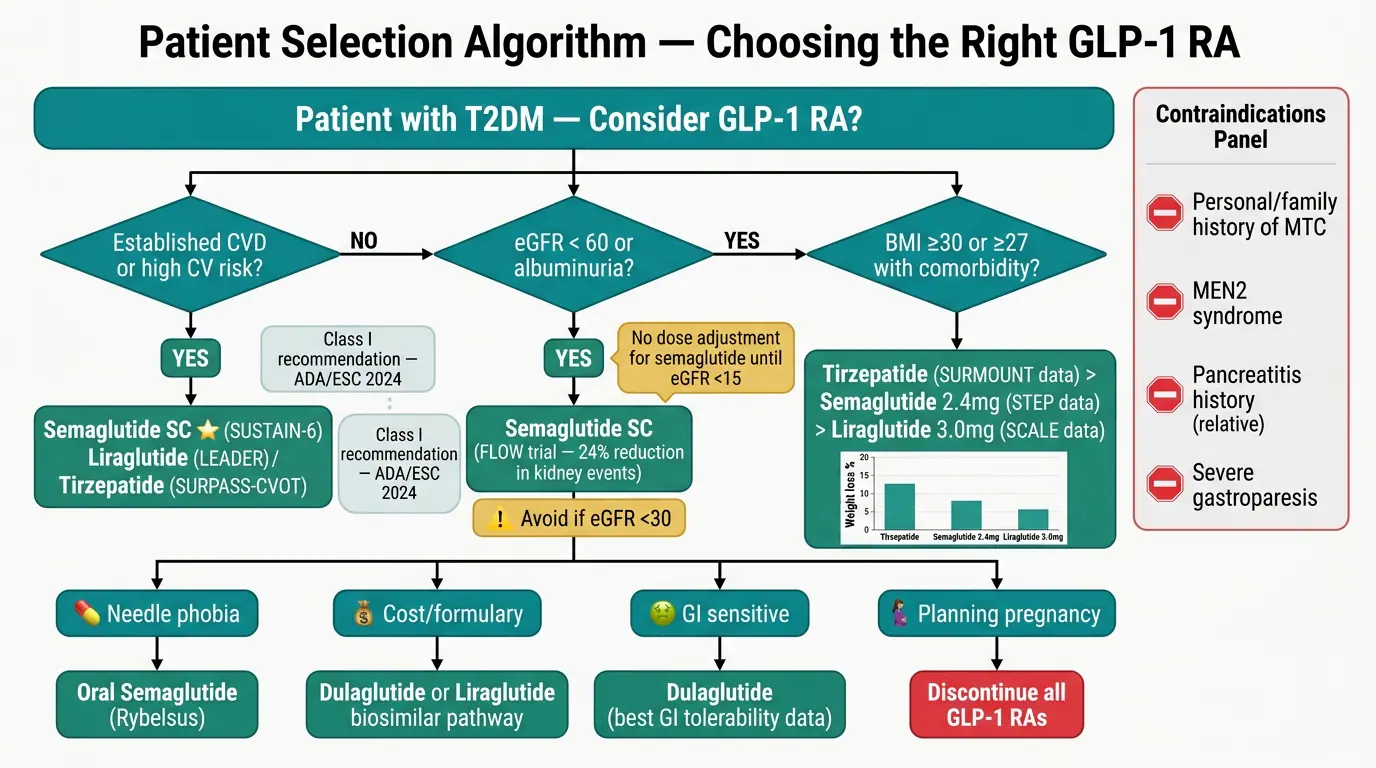
Image description
The illustration presents Stepwise approach from indication to agent choice.
Clinical interpretation
Start with indication (T2DM, obesity, ASCVD, CKD), assess contraindications (MTC/MEN2 history, pregnancy), screen GI disease, then match agent to priorities (weight vs CV vs renal vs convenience).
Secondary selection criteria
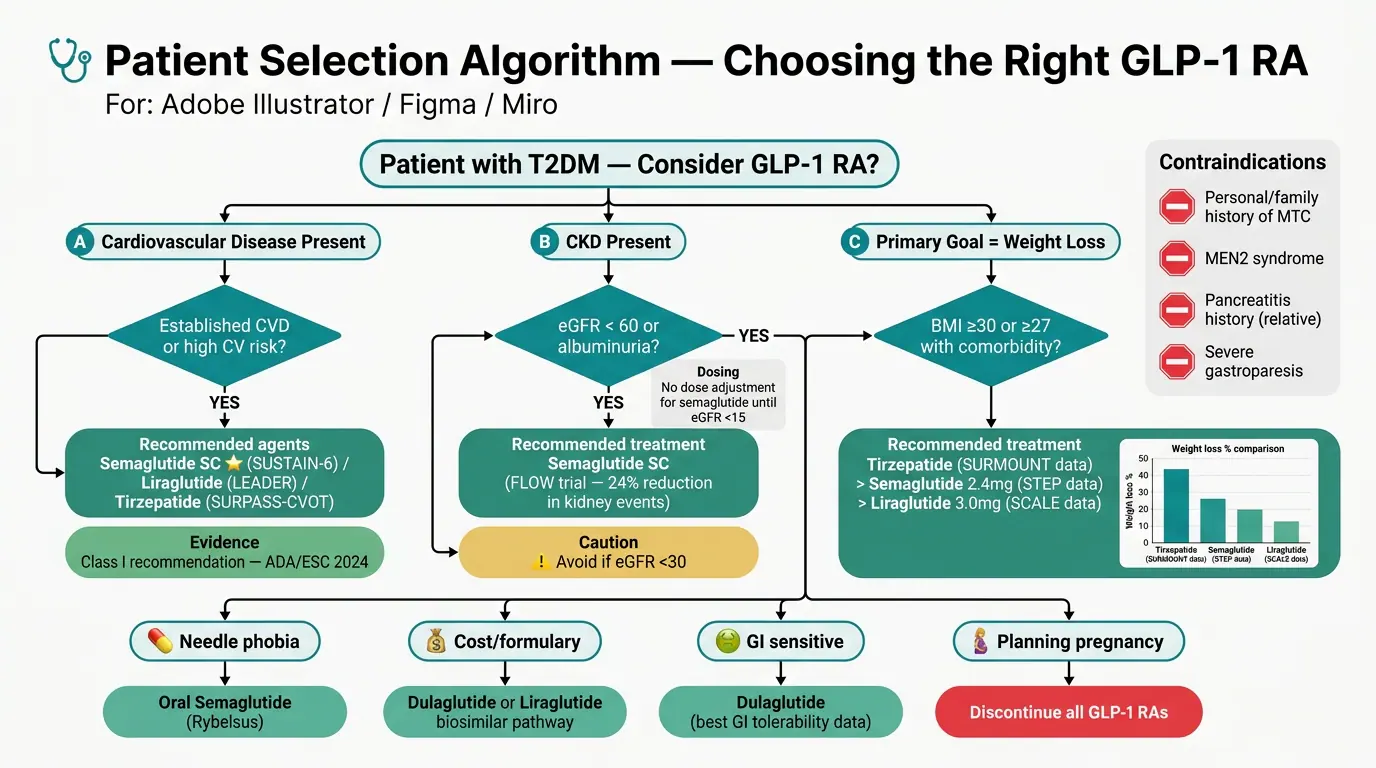
Image description
The illustration presents Comorbidity-driven refinements.
Clinical interpretation
HFpEF obesity phenotype favours semaglutide/tirzepatide; advanced CKD may require dose review; pancreatitis history contraindicates class.
Metabolic pathways
Diabetes–obesity overlap pathway
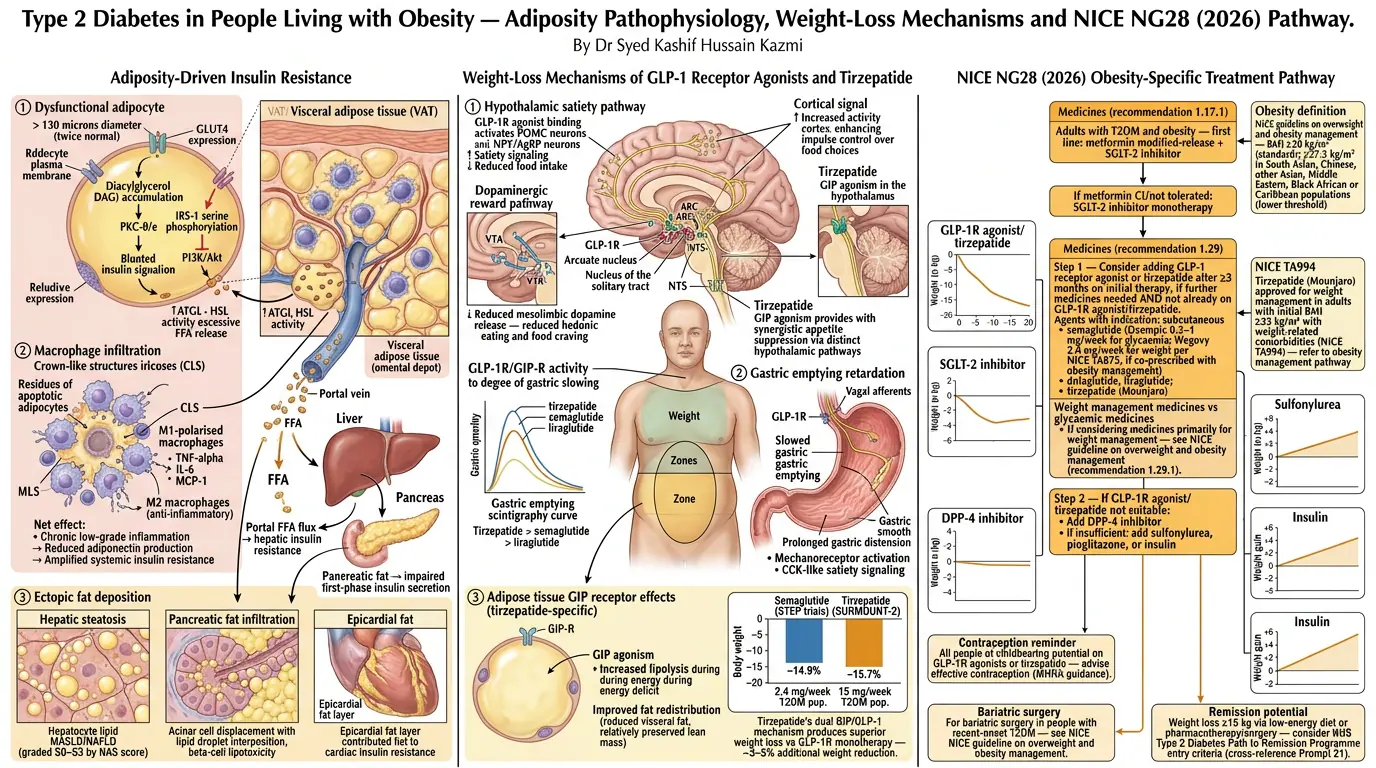
Image description
The illustration presents Dual indication populations common in practice.
Clinical interpretation
Many patients meet criteria for both T2DM and obesity management — align dose (Ozempic 1.0 mg vs Wegovy 2.4 mg semaglutide) with primary treatment goal.
Adipose tissue biology
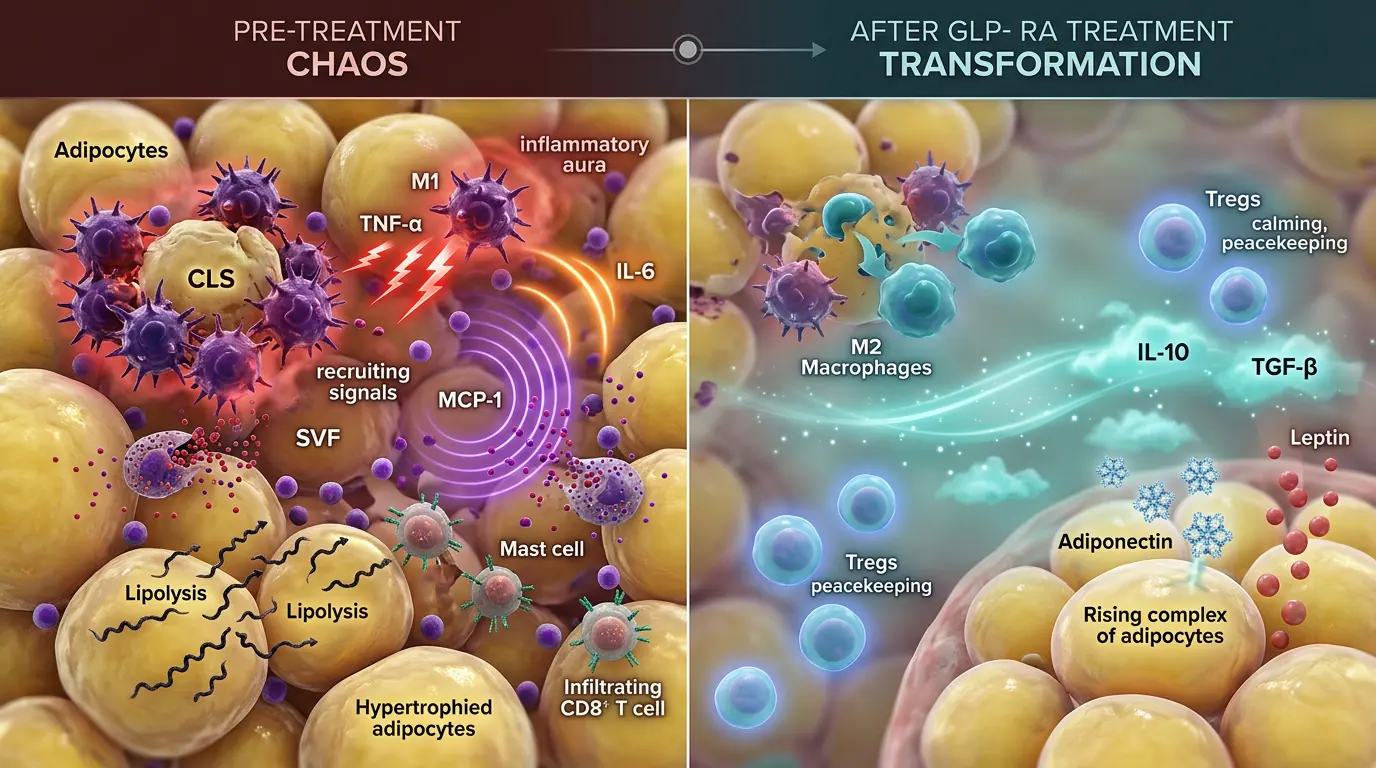
Image description
The illustration presents White vs brown adipose and GLP-1 effects on lipolysis.
Clinical interpretation
Weight loss reduces visceral adiposity — key driver of insulin resistance improvement; GLP-1 may modestly increase energy expenditure via central pathways.
Assessment
Metabolic assessment panel
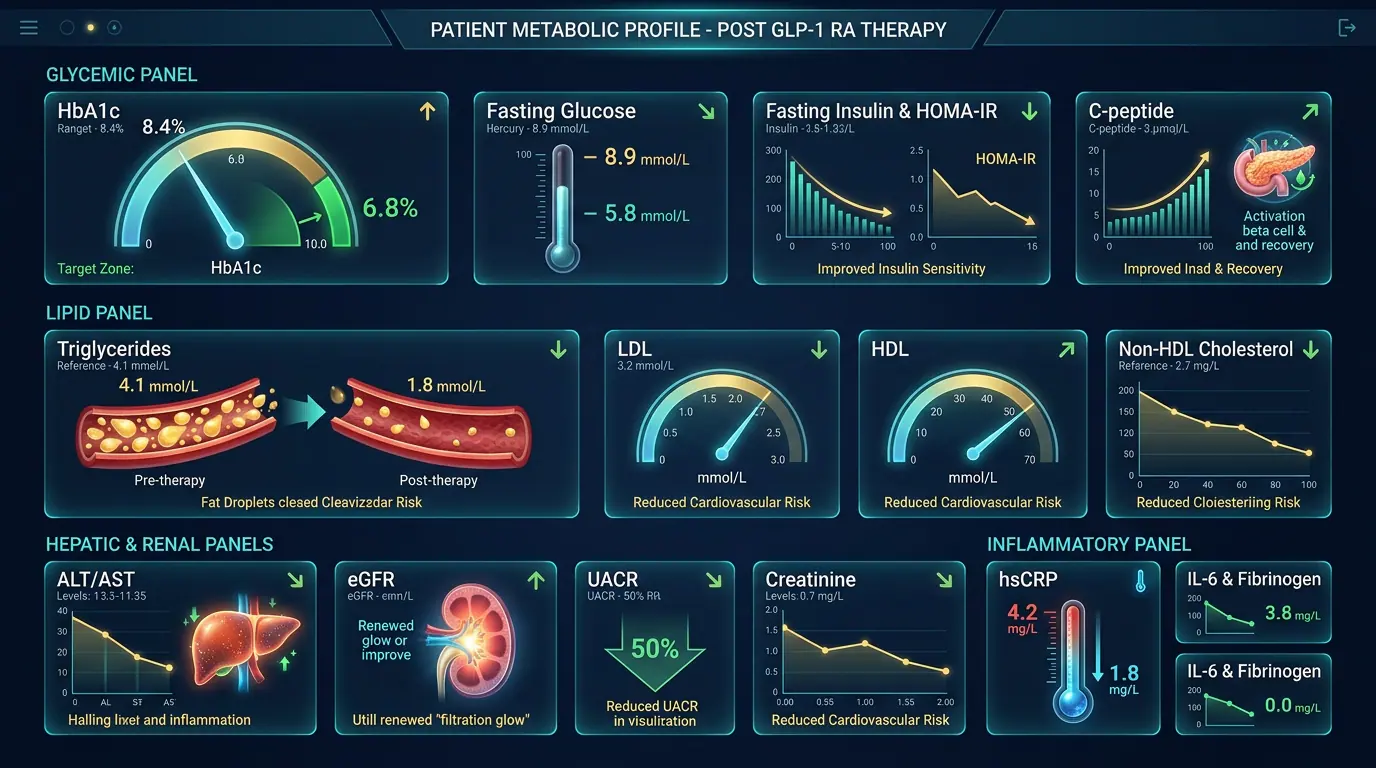
Image description
The illustration presents Baseline tests before initiation.
Clinical interpretation
HbA1c, renal function, liver enzymes, lipids, calcitonin if MTC risk, pregnancy test, and thyroid symptoms review. Retinopathy screening in diabetes per national programme.
Body composition — DXA context

Image description
The illustration presents Monitoring lean mass during substantial weight loss.
Clinical interpretation
DXA substudies show lean mass loss proportional to total weight loss; exercise mitigation is guideline-consistent advice.
Clinical FAQs
Frequently asked questions
Who should not take GLP-1 receptor agonists?
GLP-1 agonists are contraindicated in personal or family history of medullary thyroid carcinoma or MEN 2, and in known hypersensitivity. Caution applies in severe gastrointestinal disease, pancreatitis history and pregnancy. Assess each patient against the current SmPC.