Overview

The Clinical Evidence Landscape

From glycaemic non-inferiority to disease-modifying outcomes

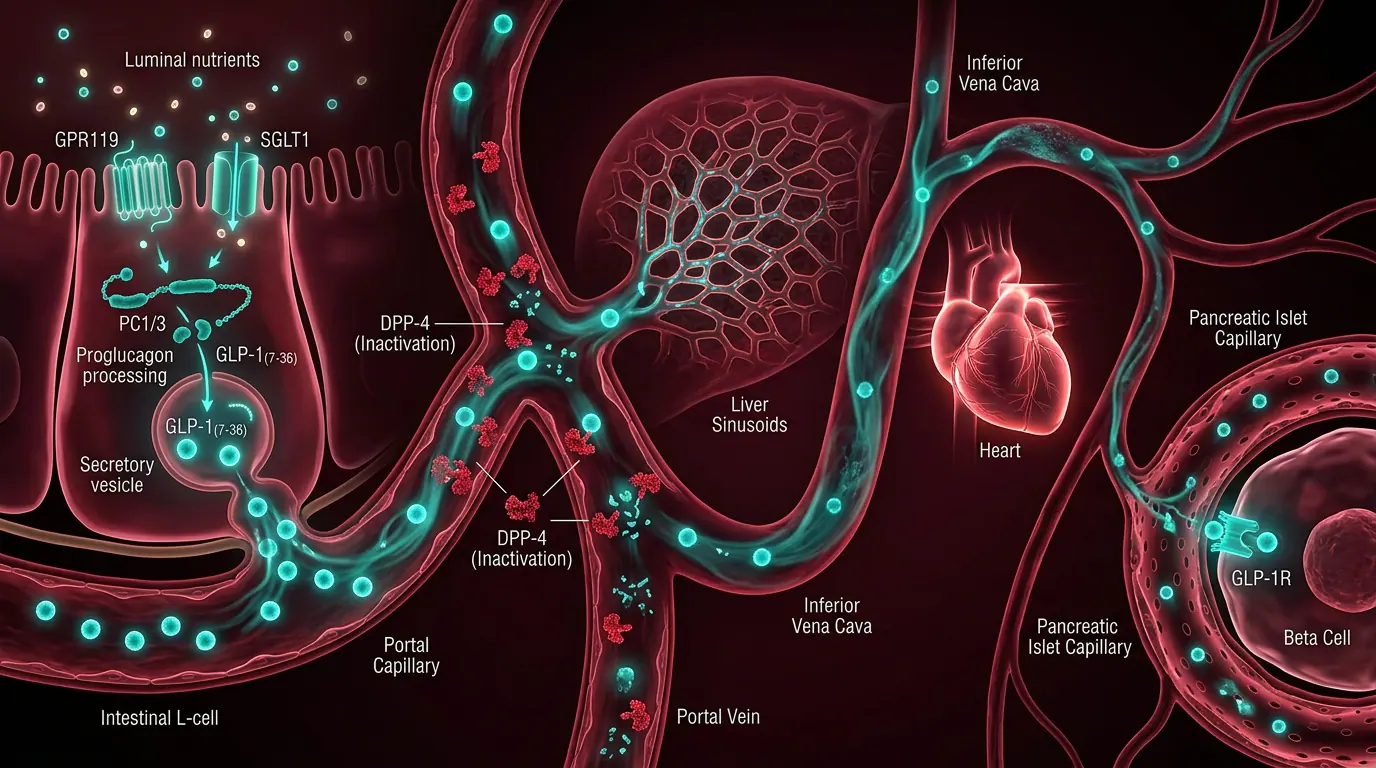
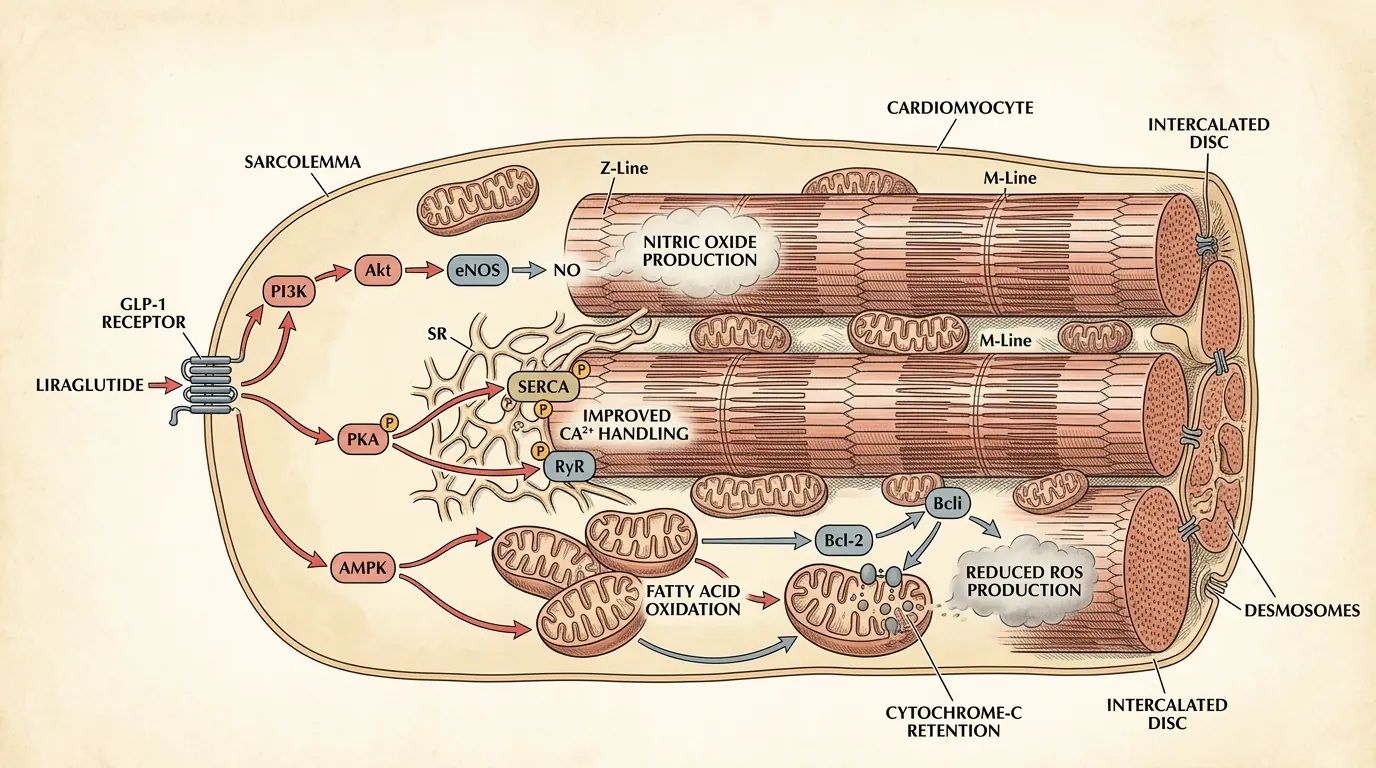
The GLP-1 RA evidence base is among the most extensive in modern pharmacology. Beginning with short-term glycaemic efficacy trials in the mid-2000s, the field has generated a series of landmark cardiovascular outcomes trials (CVOTs) — mandated by the FDA after the rosiglitazone signal — that collectively enrolled over 80,000 patients in high-risk T2DM cohorts. More recently, dedicated obesity trials (STEP, SURMOUNT), renal outcomes trials (FLOW), heart failure trials (STEP-HFpEF), MASH trials (SYNERGY-NASH), and neurological studies (SPARK, EVOKE) have expanded the evidence base far beyond glucose control into disease-modifying territory.

80,000+
Patients in CV outcomes trials
6
Trials showing MACE superiority
22.5%
Max weight loss — SURMOUNT-1 tirzepatide 15 mg
24%
Renal composite reduction — FLOW trial
SELECT 2023 — The Trial That Repositioned the Class
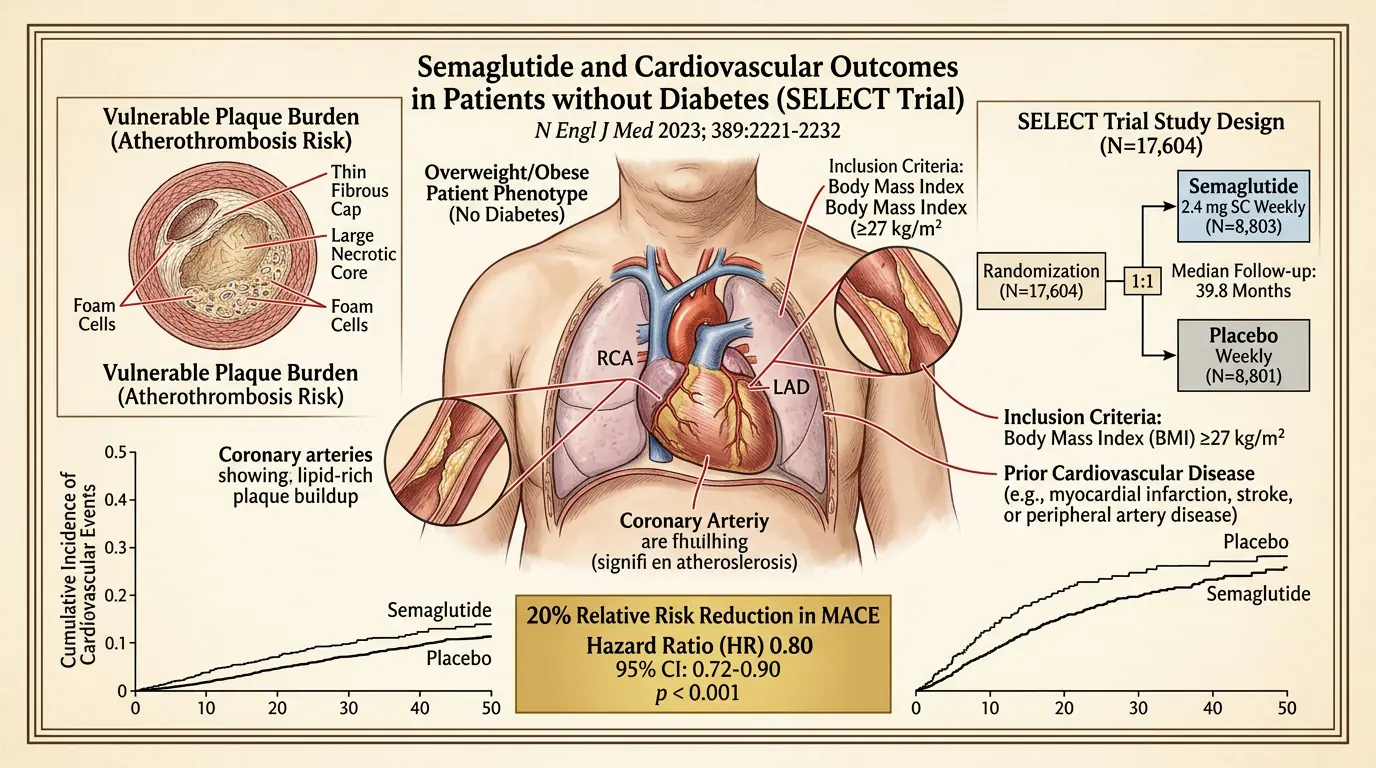
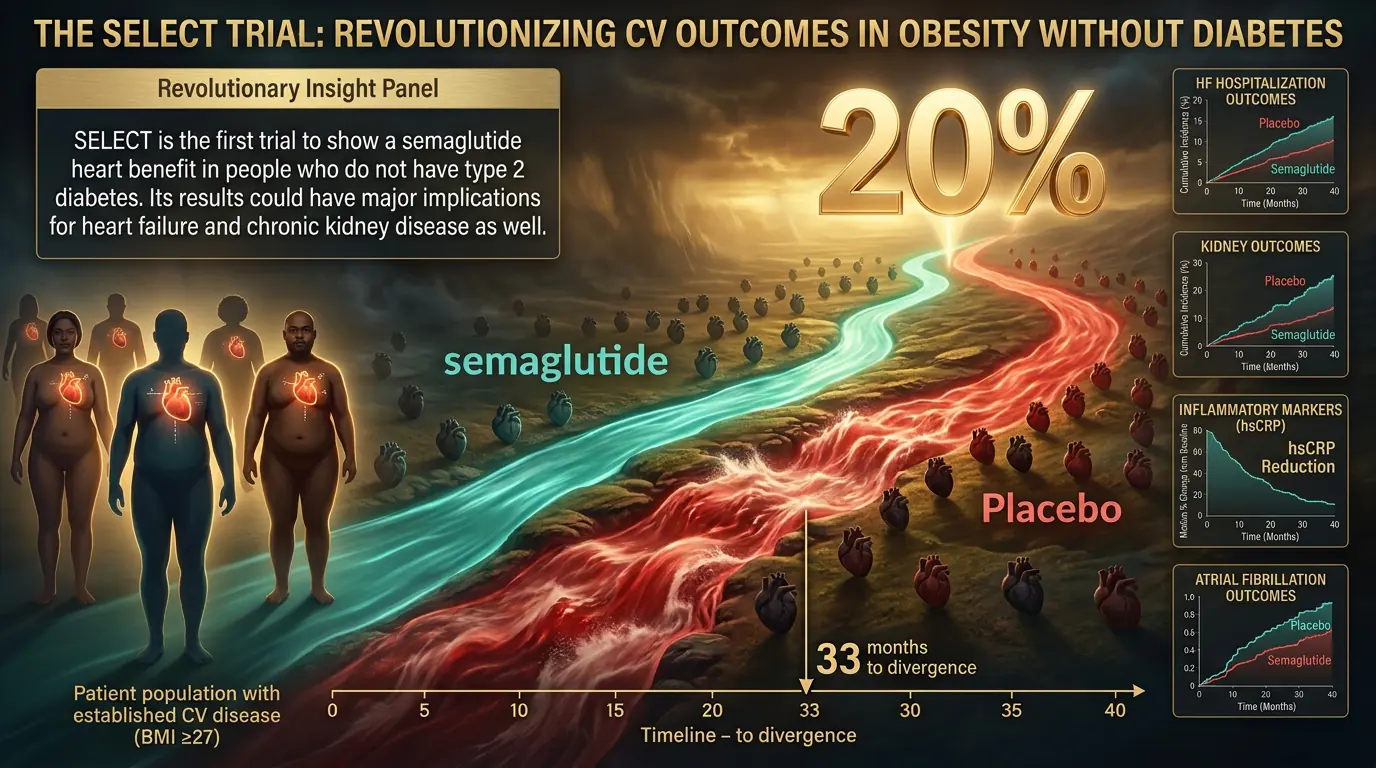
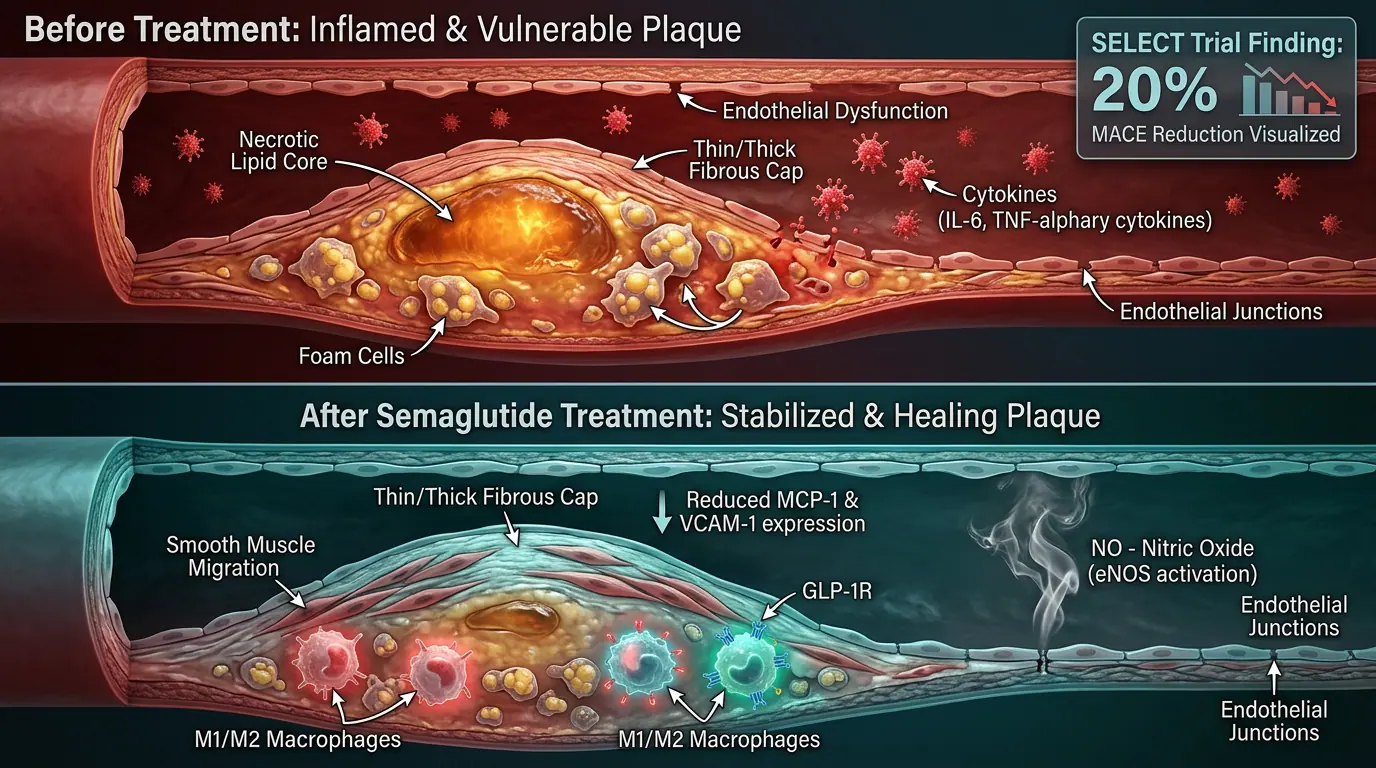
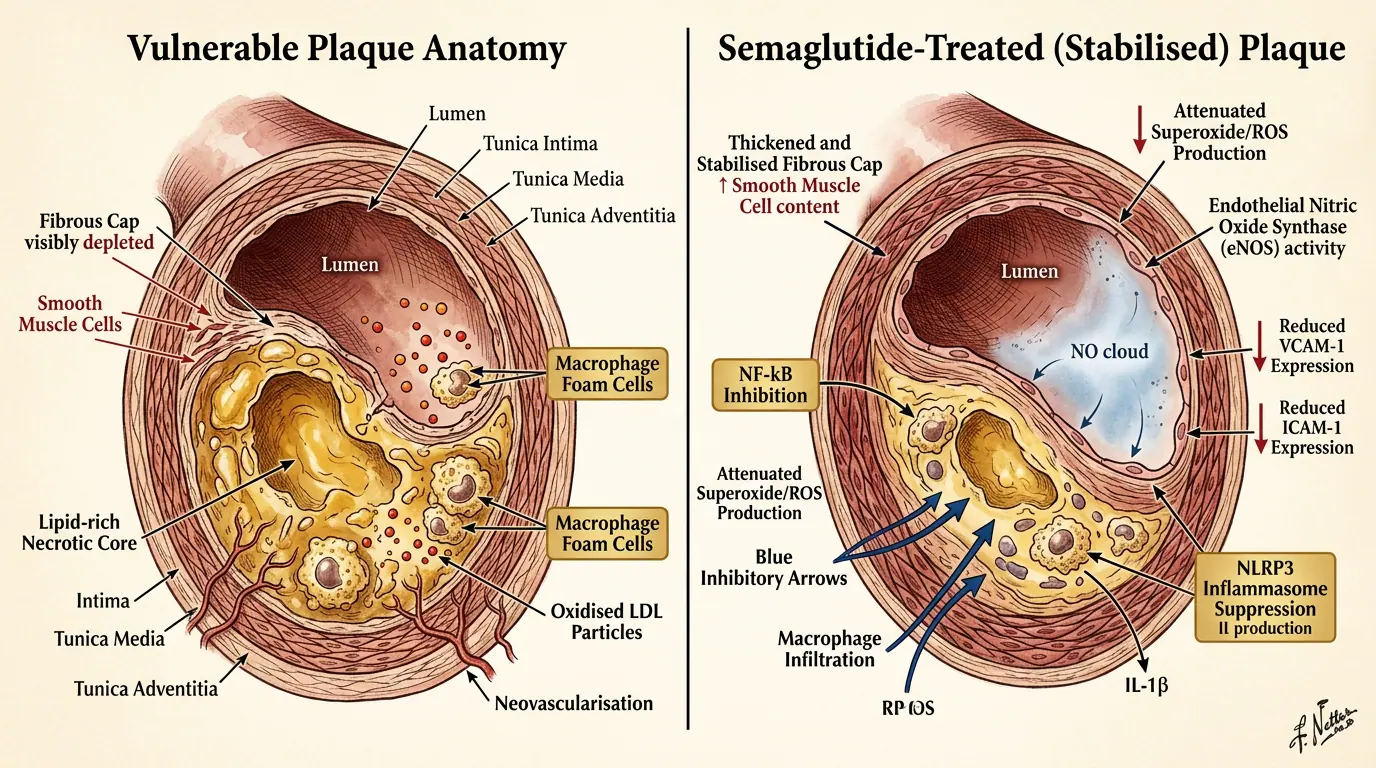
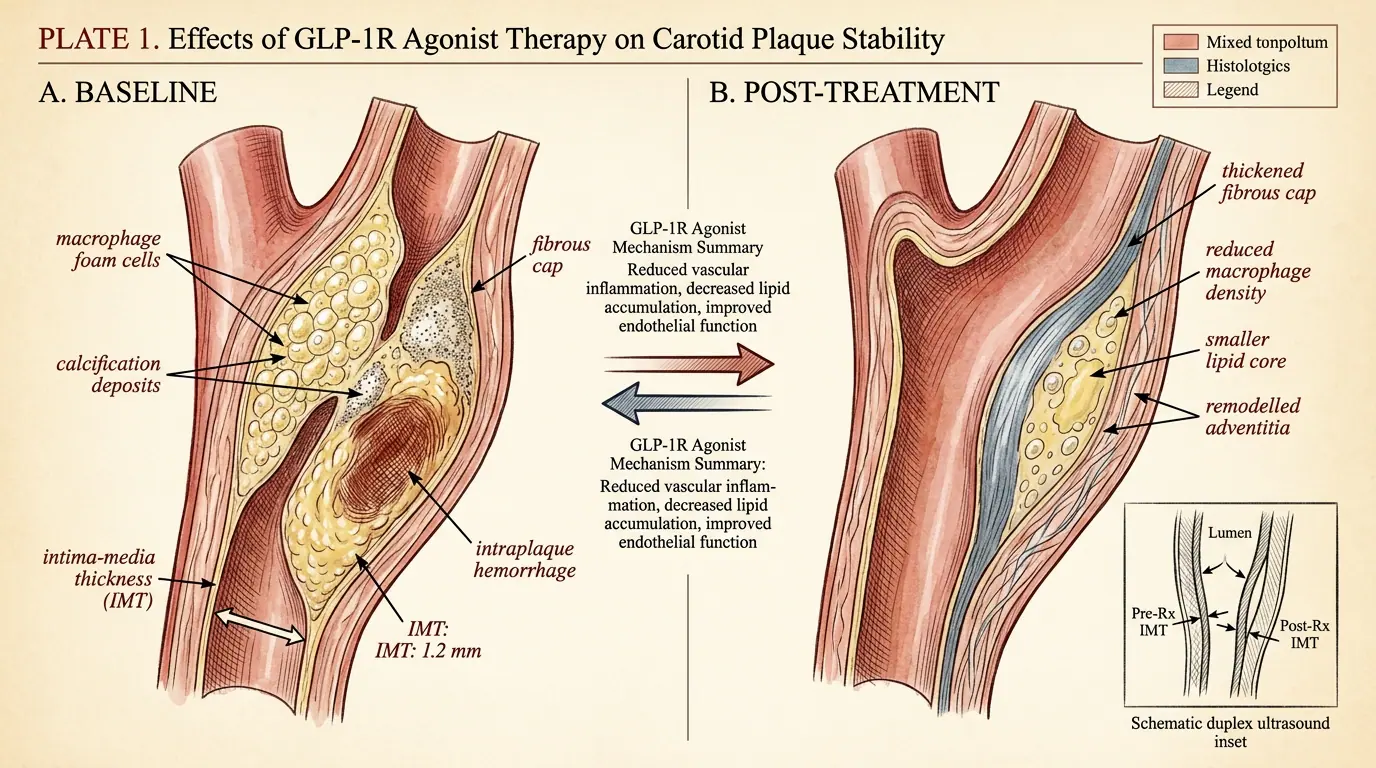
SELECT was the first ever randomised trial to demonstrate that pharmacological weight loss reduces cardiovascular events in people without diabetes. It proved GLP-1 RAs are cardioprotective through mechanisms beyond glycaemic control — establishing obesity itself as a treatable cardiovascular disease. The results underpinned MHRA label expansions, NICE access decisions for Wegovy, and AHA/ACC guideline updates positioning GLP-1 RAs as primary-prevention cardiometabolic agents.
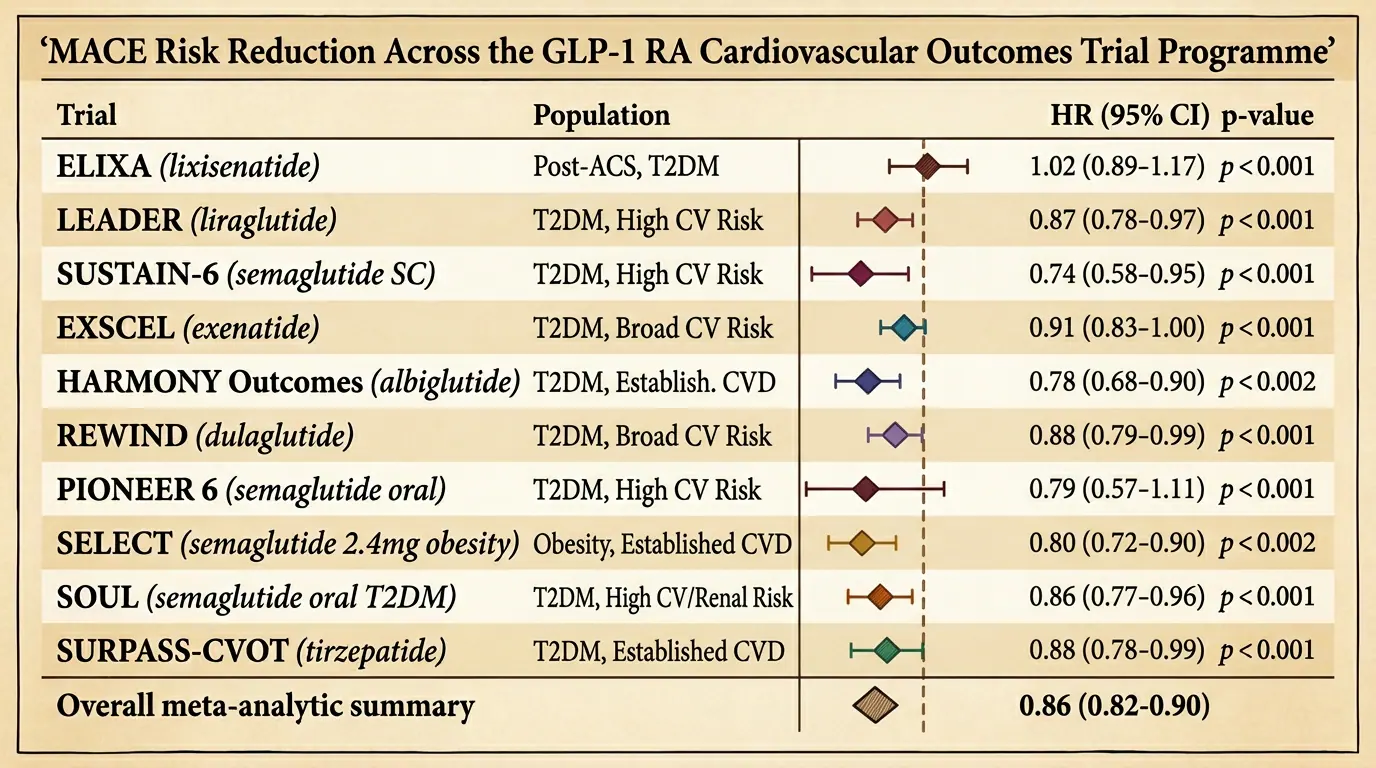
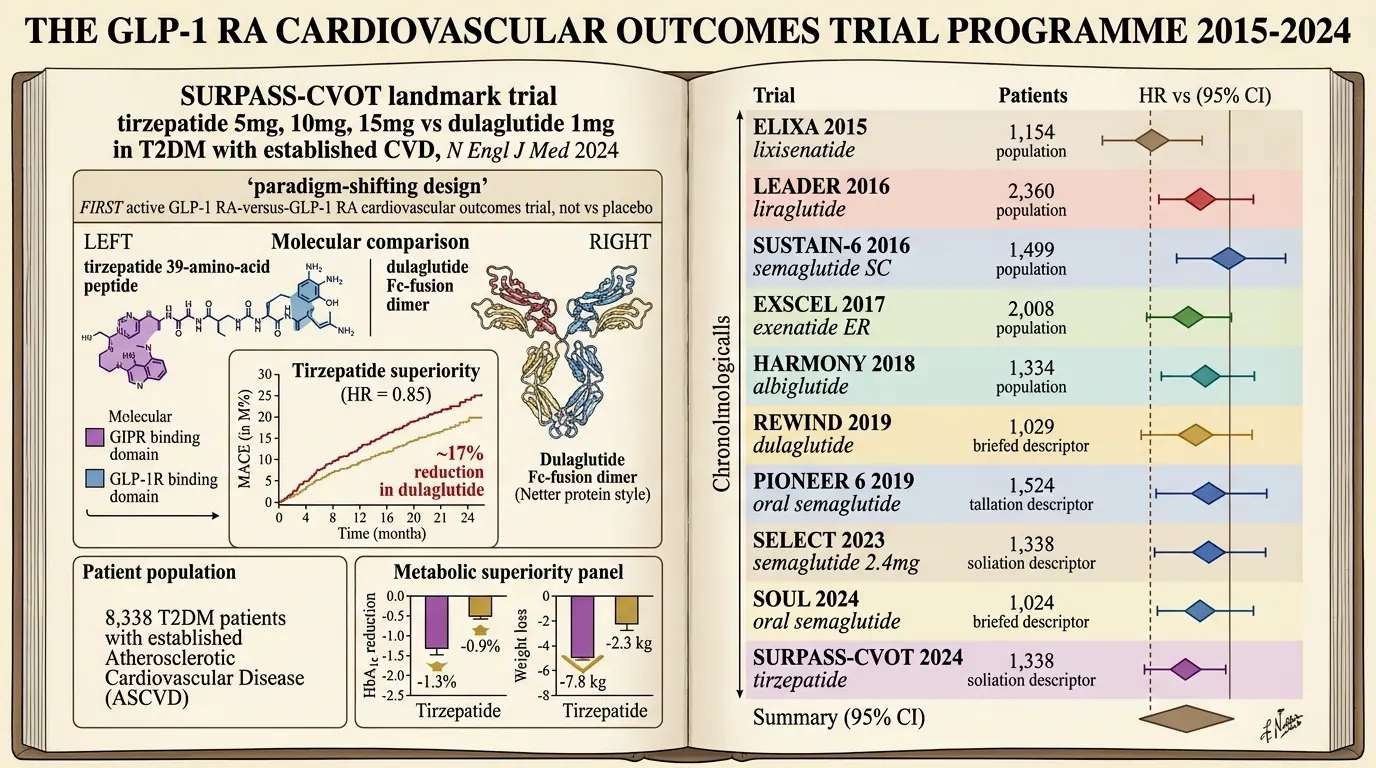
CV Outcomes Trials — MACE Hazard Ratios (Primary Endpoint vs Placebo)
Trial · Drug
Favours drug ◄──────────── Favours placebo
HR (95% CI)
p-value
SELECTSemaglutide 2.4 mg · No T2DM
0.80 (0.72–0.90)
<0.001
SUSTAIN-6Semaglutide SC · T2DM
0.74 (0.58–0.95)
0.02
AMPLITUDE-OEfpeglenatide
0.73 (0.58–0.92)
0.0004
LEADERLiraglutide 1.8 mg
0.87 (0.78–0.97)
0.01
REWINDDulaglutide 1.5 mg
0.88 (0.79–0.99)
0.026
EXSCELExenatide XR 2 mg
0.91 (0.83–1.00)
0.06
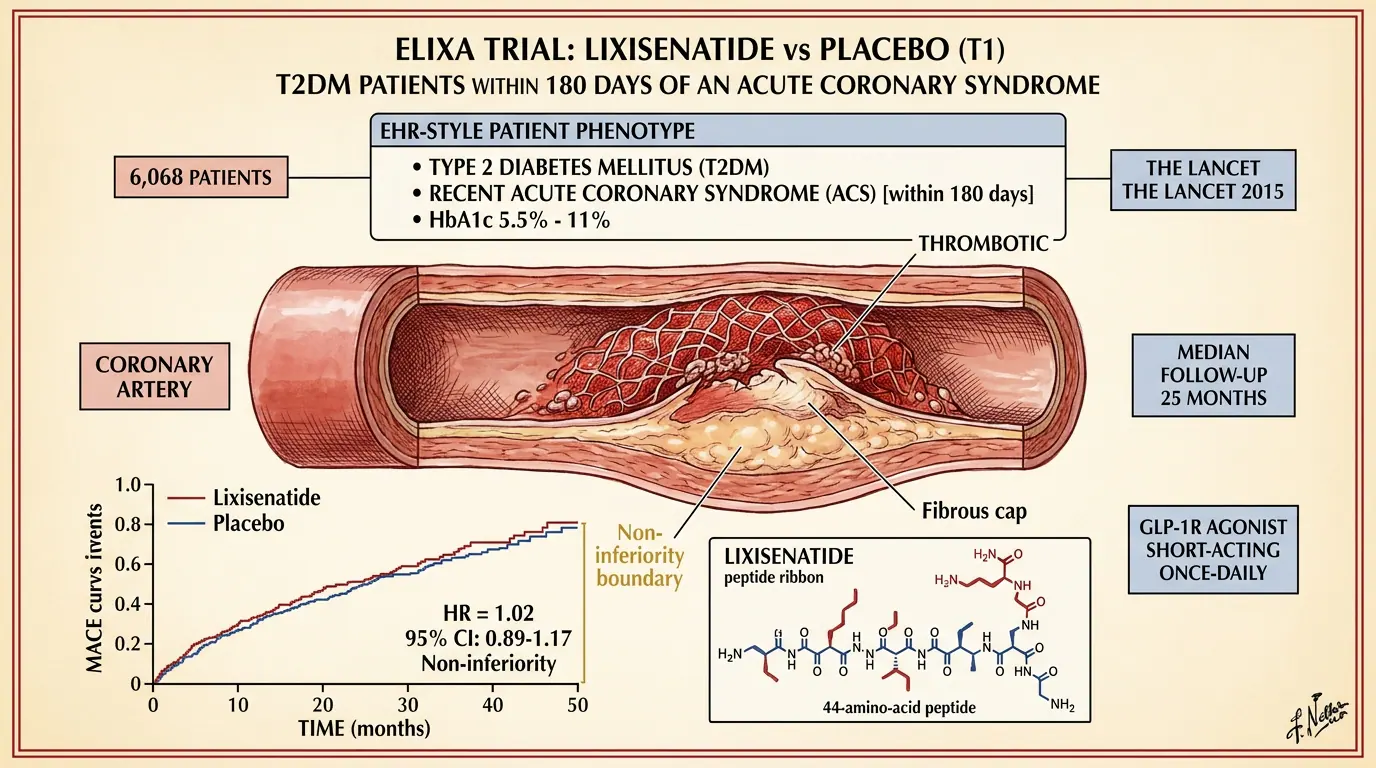
ELIXALixisenatide
1.02 (0.89–1.17)
0.81
HR = hazard ratio for 3-point MACE (CV death, non-fatal MI, non-fatal stroke) vs placebo. Diamond = point estimate. Bar = 95% CI. Null line at HR 1.0.
Glycaemia Programme

The SUSTAIN Programme

Semaglutide SC in T2DM · SUSTAIN 1–11 · 2016–2022

The SUSTAIN programme (Semaglutide Unabated Sustainability in Treatment of Type 2 Diabetes) comprises eleven phase 3 trials establishing semaglutide SC across all T2DM treatment stages — from drug-naive monotherapy through triple combination therapy — including landmark head-to-head comparisons against sitagliptin, dulaglutide, and insulin.

SUSTAIN-1
Semaglutide SC monotherapy vs placebo · Lancet Diabetes Endocrinol 2017
Monotherapy n=388
−1.5%
HbA1c (1 mg · 30 wks)
👥 388
30 weeks
🆚 Placebo
📍 Drug-naive / metformin
PopulationAdults with T2DM inadequately controlled on diet/exercise or metformin. Mean HbA1c 8.1%, BMI 33.8 kg/m².
InterventionSemaglutide SC 0.5 mg or 1.0 mg once weekly × 30 weeks
ComparatorPlacebo SC weekly (double-blind)
OutcomesPrimary: HbA1c change at 30 weeks. Secondary: weight, FPG, ≥HbA1c targets, hypoglycaemia.
HbA1c (1 mg)
−1.5%
vs −0.02% placebo
p<0.0001
Weight loss
−4.5 kg
1 mg vs −0.9 kg placebo
p<0.0001
HbA1c <7%
73%
vs 23% placebo (1 mg)
p<0.0001
SUSTAIN-1 established semaglutide as a potent monotherapy agent with a 73% HbA1c target attainment rate at 1 mg — unprecedented for the class at the time. The clear dose-response between 0.5 mg and 1 mg (−1.2% vs −1.5%) supported dose escalation as a clinical strategy. Nausea occurred in 20.3% on 1 mg, largely transient and concentrated in the first 4–8 weeks, setting the tolerability profile replicated in all subsequent trials.
SUSTAIN-2
Semaglutide SC vs Sitagliptin 100 mg · Diabetes Care 2017
vs DPP-4 inhibitor n=1,231 · 56 weeks
−1.06%
HbA1c diff vs sitagliptin (1 mg)
👥 1,231
56 weeks
🆚 Sitagliptin 100 mg
📍 On metformin ± TZD
Semaglutide 0.5 mg and 1 mg vs sitagliptin 100 mg (maximum licensed DPP-4i dose) on metformin ± thiazolidinedione. Both semaglutide doses outperformed sitagliptin on HbA1c (0.5 mg: −0.77% difference; 1 mg: −1.06% difference) and weight (0.5 mg: −2.4 kg extra; 1 mg: −4.2 kg extra). Critically, semaglutide 0.5 mg — the starting maintenance dose — outperformed sitagliptin at its maximum dose, demonstrating the superior efficacy ceiling of GLP-1 RAs over DPP-4 inhibitors at all treatment levels.
HbA1c diff (1 mg)
−1.06%
Sema vs sitagliptin · 56 wks
p<0.0001
Weight diff (1 mg)
−4.2 kg
Extra vs sitagliptin
p<0.0001
HbA1c <7% (1 mg)
68%
vs 41% sitagliptin
p<0.0001
SUSTAIN-7
Semaglutide SC vs Dulaglutide — Head-to-Head · Lancet Diabetes Endocrinol 2018
GLP-1 RA vs GLP-1 RA Landmark head-to-head n=1,201
Superior
HbA1c & weight vs dula 1.5 mg
👥 1,201
40 weeks
🆚 Dulaglutide 0.75 & 1.5 mg
In this head-to-head trial and at the stated doses (semaglutide 1 mg vs dulaglutide 1.5 mg), semaglutide reduced HbA1c by −1.8% vs −1.4% (difference −0.40%, p<0.0001) and weight by −6.5 kg vs −3.0 kg (difference −3.5 kg, p<0.0001). HbA1c <7% was achieved in 67% vs 54%. The result applies to the studied doses, population and endpoints; it is not a universal product ranking.
HbA1c diff
−0.40%
Sema 1 mg vs dula 1.5 mg
p<0.0001
Weight diff
−3.5 kg
Sema 1 mg vs dula 1.5 mg
p<0.0001
HbA1c <7%
67% vs 54%
Sema 1 mg vs dula 1.5 mg
p<0.0001
SUSTAIN-11
Semaglutide 2 mg vs 1 mg SC · Lancet 2022 · Basis for 2 mg approval
Dose escalation n=961 · 40 weeks
−2.1%
HbA1c (2 mg · 40 wks)
👥 961
40 weeks
🆚 Semaglutide 1 mg vs 2 mg
SUSTAIN-11 established the case for the semaglutide 2 mg dose — approved by EMA 2022, subsequently MHRA. Sema 2 mg produced superior HbA1c reduction (−2.1% vs −1.9%, p=0.0055) and weight loss (−6.9 kg vs −6.0 kg) vs 1 mg. In the subgroup with baseline HbA1c ≥9%, the 2 mg dose achieved −2.5% HbA1c reduction. Participants achieving ≥10% weight loss: 35% (2 mg) vs 22% (1 mg). The 2 mg dose bridges the T2DM dosing (1 mg) and the obesity dose (2.4 mg), providing a useful intermediate for patients with T2DM where additional weight loss is a priority.
HbA1c (2 mg)
−2.1%
vs −1.9% sema 1 mg
p=0.0055
Weight (2 mg)
−6.9 kg
vs −6.0 kg sema 1 mg
p=0.0029
≥10% weight loss
35%
vs 22% on 1 mg
p<0.001
Oral Programme

The PIONEER Programme

Oral semaglutide (Rybelsus) · PIONEER 1–10 + SOUL · 2019–2024

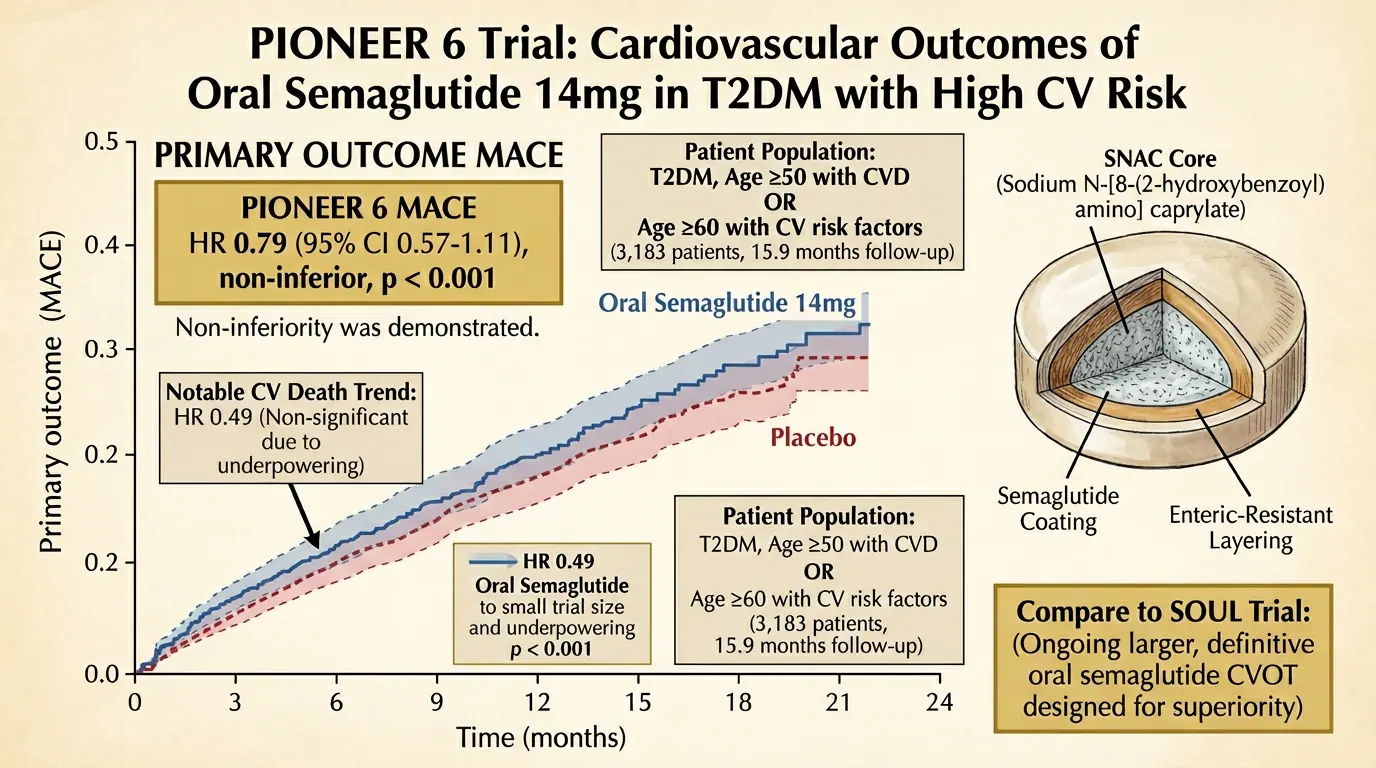
PIONEER (Peptide Innovation for Early Diabetes Treatment) established oral semaglutide across the T2DM spectrum. Ten phase 3 trials compared oral sema (3/7/14 mg OD) vs placebo, sitagliptin, empagliflozin, liraglutide, and insulin — plus the SOUL outcomes trial (2024) extending CV evidence to the oral formulation.

PIONEER-3
Oral Semaglutide vs Sitagliptin · JAMA 2019 · Largest PIONEER trial
Oral GLP-1 RA vs Sitagliptin n=1,864 · 78 weeks
Superior
HbA1c and weight
👥 1,864
78 weeks
🆚 Sitagliptin 100 mg
📍 On metformin ± SU
PopulationAdults with T2DM on metformin ± sulphonylurea, HbA1c 7.0–10.5%. Mean HbA1c 8.3%, BMI 32.5 kg/m².
InterventionOral semaglutide 3 mg, 7 mg, or 14 mg OD (taken fasting, 30 min before first meal)
ComparatorSitagliptin 100 mg OD (double-dummy design)
OutcomesPrimary: HbA1c change at week 26. Secondary: weight, ≥HbA1c targets, long-term durability at 78 weeks.
The largest and most pivotal PIONEER trial. Oral semaglutide 14 mg reduced HbA1c by −1.3% vs −0.8% sitagliptin (difference −0.5%, p<0.0001) and weight by −3.3 kg vs −0.8 kg. The 78-week duration confirmed sustained efficacy without attenuation — addressing concerns about long-term oral bioavailability stability. The 14 mg oral dose produced outcomes equivalent to SC semaglutide 0.5 mg, confirming dose equivalence across formulations. GI discontinuation rate was 11% (oral sema 14 mg) vs 4% sitagliptin — the key adherence limitation of the oral route.
HbA1c (14 mg)
−1.3%
vs −0.8% sitagliptin · 26 wks
p<0.0001
Weight (14 mg)
−3.3 kg
vs −0.8 kg sitagliptin
p<0.0001
GI discontinuation
11%
Oral sema 14 mg vs 4% sita
Adherence challenge
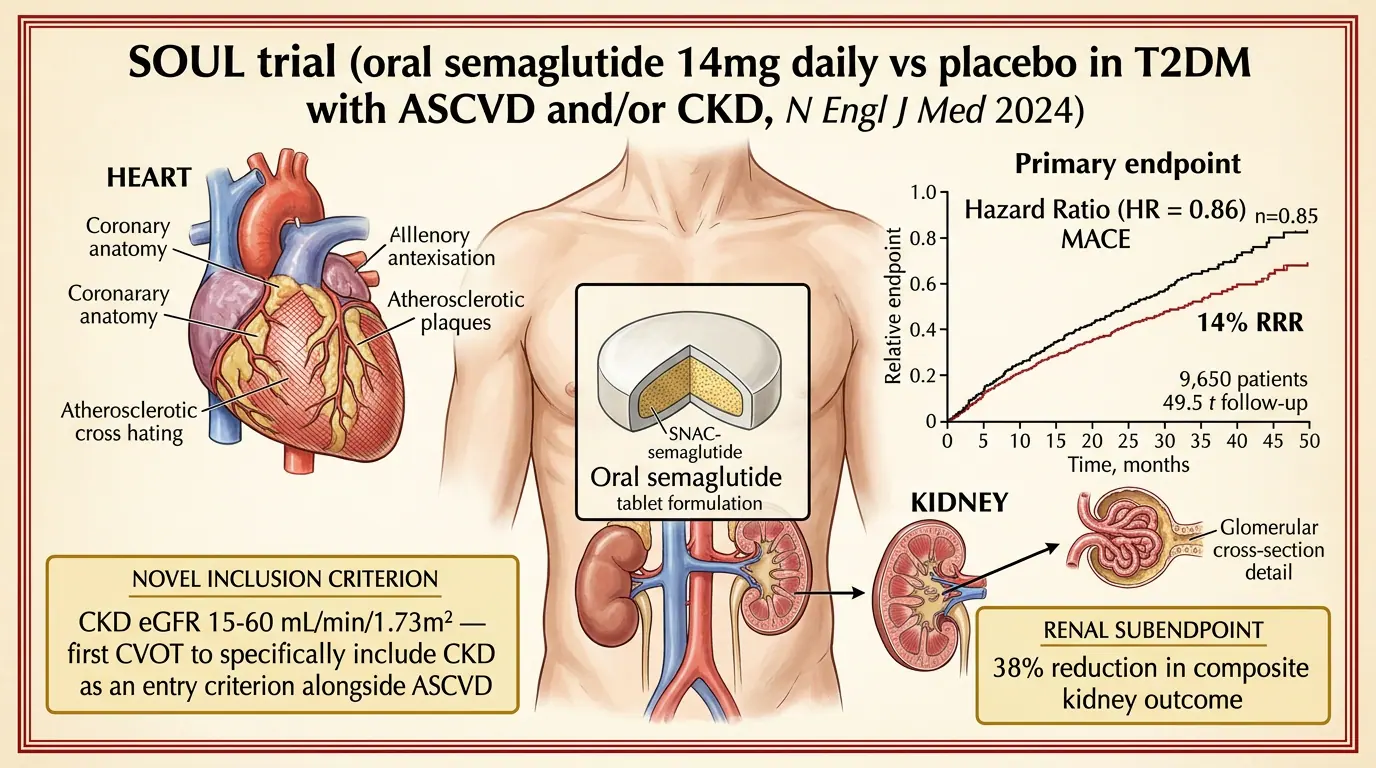
SOUL Trial
Oral Semaglutide CV Outcomes in T2DM + CKD · NEJM 2024
CVOT · Oral formulation CV Superiority ✓ n=9,650
HR 0.86
MACE · p=0.039
👥 9,650
~4 years median
🆚 Placebo
📍 T2DM + CVD or CKD
SOUL was designed as the dedicated CV outcomes trial for oral semaglutide 14 mg OD in adults with T2DM and established CVD or CKD (eGFR 15–60). The primary MACE endpoint was reduced by 14% (HR 0.86, 95% CI 0.75–0.98, p=0.039) — statistically significant superiority, confirming the CV benefit class extends to the oral formulation. All-cause mortality trended favourably (HR 0.90). Importantly, renal outcomes also improved (HR 0.77 for kidney composite), making SOUL the second trial (after FLOW) to show GLP-1 RA renoprotection. This established oral semaglutide as a fully evidence-based oral alternative to SC semaglutide for CV-risk patients who strongly prefer oral therapy.
3-pt MACE
HR 0.86
95% CI 0.75–0.98 · ~4 yr f/up
p=0.039
Kidney composite
HR 0.77
Renal protection confirmed
Pre-specified
All-cause mortality
HR 0.90
Trending; not significant
p=0.14
Tirzepatide Programme

The SURPASS Programme

Tirzepatide in T2DM · SURPASS 1–5 + CVOT · 2021–2024

The SURPASS programme established tirzepatide across all T2DM treatment stages, consistently demonstrating superiority over best available comparators — including semaglutide 1 mg — setting a new efficacy benchmark for the entire incretin class.

SURPASS-2
Tirzepatide vs Semaglutide 1 mg — Definitive Head-to-Head · NEJM 2021
vs Semaglutide 1 mg All 3 doses superior n=1,879
−2.37%
HbA1c (15 mg) · Sema −1.86%
👥 1,879
40 weeks
🆚 Semaglutide 1 mg SC (open-label)
📍 T2DM on metformin
PopulationAdults with T2DM inadequately controlled on metformin (HbA1c 7.5–11.0%). Mean HbA1c 8.28%, weight 93.7 kg.
InterventionTirzepatide 5 mg, 10 mg, or 15 mg SC weekly (titrated from 2.5 mg)
ComparatorOpen-label semaglutide 0.5 mg → 1.0 mg SC weekly (per-label titration)
OutcomesPrimary: HbA1c change at 40 weeks. Key secondary: weight, ≥HbA1c targets, normoglycaemia (≤5.7%), hypoglycaemia.
SURPASS-2 definitively established tirzepatide above semaglutide. All three tirzepatide doses outperformed semaglutide 1 mg on both co-primary endpoints. At 15 mg: HbA1c reduction −2.37% vs −1.86% (difference −0.51%); weight loss −11.2 kg vs −5.7 kg (difference −5.5 kg). Normoglycaemia (HbA1c ≤5.7%) achieved in 27% on tirzepatide 15 mg vs 7% semaglutide — a remarkable metabolic remission-like outcome. Weight loss benefit was proportionally greater in BMI ≥35 subgroups (−13.5 kg vs −6.4 kg), consistent with increasing GIP receptor contribution at higher adiposity. The open-label design used per-label semaglutide titration, enhancing real-world external validity.
HbA1c (15 mg)
−2.37%
vs −1.86% sema 1 mg · 40 wks
p<0.001
Weight (15 mg)
−11.2 kg
vs −5.7 kg sema 1 mg
p<0.001
HbA1c ≤5.7%
27%
Tirz 15 mg vs 7% sema 1 mg
Remission-like
SURPASS-5
Tirzepatide Added to Insulin Glargine · Lancet Diabetes Endocrinol 2022
Add-on to basal insulin n=475 · 40 weeks
−10.4 kg
weight diff vs placebo on glargine
👥 475
40 weeks
🆚 Placebo on glargine background
Tirzepatide added to insulin glargine ± metformin. At 15 mg: HbA1c decreased −2.6% vs −0.9% placebo; weight decreased −8.8 kg vs +1.6 kg placebo — a 10.4 kg weight difference. This fundamentally reverses the expected weight gain from insulin intensification, supporting tirzepatide as an intensification agent enabling weight-neutral or weight-reducing glycaemic optimisation rather than the traditional weight-gaining insulin escalation pathway. NICE NG28 caution: reduce glargine dose by 20% at tirzepatide initiation to minimise hypoglycaemia.
HbA1c (15 mg)
−2.6%
vs −0.9% placebo on glargine
p<0.0001
Weight diff
−10.4 kg
Tirz −8.8 vs +1.6 kg placebo
p<0.0001
Hypoglycaemia ⚠
Reduce insulin
Glargine dose ↓20% at initiation
NICE caution
Dulaglutide Programme

The AWARD Programme

Dulaglutide in T2DM · AWARD 1–11 · 2014–2020

AWARD-6
Dulaglutide 1.5 mg vs Liraglutide 1.8 mg · Lancet Diabetes Endocrinol 2014
vs Liraglutide Non-inferiority n=599 · 26 weeks
Non-inf
HbA1c vs liraglutide 1.8 mg
👥 599
26 weeks
🆚 Liraglutide 1.8 mg OD
Dulaglutide 1.5 mg weekly was non-inferior to liraglutide 1.8 mg daily in HbA1c reduction at 26 weeks (−1.42% vs −1.36%; difference 0.06%, upper 97.5% CI 0.19% — within the 0.4% non-inferiority margin). Weight loss slightly favoured liraglutide (−3.61 vs −3.18 kg, NS). The trial established the convenience argument (weekly vs daily injection) while maintaining glycaemic equivalence — driving dulaglutide's uptake in clinical practice. AWARD-11 (2020) subsequently extended dulaglutide to 3 mg and 4.5 mg doses, with the 4.5 mg dose achieving −2.02% HbA1c reduction — approaching semaglutide 1 mg performance.
HbA1c diff
+0.06%
Dula vs lira · Non-inferior
NI p<0.0001
Weight
−3.18 kg
Dula vs −3.61 kg lira (NS)
p=0.31
Frequency advantage
Weekly
vs daily lira · Patient preference
Real-world driver
Obesity Programme

The STEP Programme

Semaglutide 2.4 mg in obesity · STEP 1–8 · 2021–2023

The STEP programme (Semaglutide Treatment Effect in People with obesity) established semaglutide 2.4 mg SC weekly as the first pharmacotherapy to achieve consistent double-digit percentage weight loss in randomised trials — prompting the first major revision of obesity pharmacotherapy guidelines in two decades and establishing the clinical template for all subsequent obesity pharmacotherapy programmes.

STEP-1
Semaglutide 2.4 mg in Obesity Without T2DM · NEJM 2021 · Wilding et al.
Obesity · No T2DM Landmark RCT n=1,961 · 68 weeks
−14.9%
mean body weight
👥 1,961
68 weeks
🆚 Placebo + lifestyle counselling
📍 BMI ≥30 or ≥27 + comorbidity · No T2DM
PopulationAdults with BMI ≥30 or ≥27 with ≥1 weight-related comorbidity (HTN, dyslipidaemia, OSA, or CVD). No T2DM. Mean weight 105.4 kg, BMI 37.9 kg/m².
InterventionSemaglutide 2.4 mg SC weekly (titrated over 16 weeks: 0.25→0.5→1.0→1.7→2.4 mg) + lifestyle counselling
ComparatorPlacebo SC weekly + matched lifestyle counselling
OutcomesCo-primary: % body weight change and proportion achieving ≥5% loss at week 68. Key secondary: ≥10%, ≥15% thresholds; SBP, waist, CRP, lipids.
STEP-1 was the registration trial for Wegovy and the first pharmacotherapy trial to achieve mean weight loss previously associated only with bariatric surgery. Mean loss of −14.9% (−15.3 kg) vs −2.4% (−2.6 kg) placebo — a magnitude never previously achieved pharmacologically. 32% of participants achieved ≥15% weight loss and 10% achieved ≥20%. Comprehensive risk factor improvements: SBP −6.2 vs −1.4 mmHg; waist circumference −13.5 vs −4.1 cm; CRP −54% vs −15%. Prediabetes remission in 84% of those with pre-existing prediabetes on semaglutide. The 18% dropout rate is the trial's most notable limitation, mitigated by the controlled imputation methods used for the primary analysis.
Weight loss
−14.9%
vs −2.4% placebo · 68 weeks
p<0.001
≥15% weight loss
32%
vs 2% placebo
p<0.001
SBP reduction
−6.2 mmHg
vs −1.4 mmHg placebo
p<0.001
🎲
Randomisation
🙈
Allocation concealment
🔒
Blinding (participants)
📊
Outcome assessment
📉
Attrition (18% dropout)
📋
Selective reporting
STEP-2
Semaglutide 2.4 mg in Obesity With T2DM · Lancet 2021
Obesity + T2DM n=1,210 · 68 weeks
−9.6%
weight loss in T2DM population
👥 1,210
68 weeks
📍 BMI ≥27 + T2DM (HbA1c 7–10%)
STEP-2 enrolled patients with T2DM (HbA1c 7–10%), demonstrating that the 2.4 mg obesity dose produces greater weight loss than the licensed T2DM doses (−9.6% vs −3.4% placebo) and superior HbA1c reduction (−1.6% vs −0.4%). The ~5% attenuation in weight loss compared with STEP-1 (~−15% vs −10%) reflects the well-established blunting of GLP-1RA weight loss in the presence of diabetes — likely due to altered hypothalamic GLP-1 receptor sensitivity in the context of metabolic disease. This trial supports off-label 2.4 mg prescribing in T2DM where weight loss is the primary therapeutic goal, pending formal NICE commissioning approval at the obesity dose for T2DM patients.
Weight loss
−9.6%
vs −3.4% placebo · T2DM pop.
p<0.001
HbA1c reduction
−1.6%
vs −0.4% placebo
p<0.001
vs STEP-1
~−5%
Less than non-T2DM (diabetes blunting)
Mechanism explained
STEP-4
Continued vs Withdrawn Semaglutide — Weight Regain Trial · JAMA 2021
Withdrawal design Chronic therapy evidence n=803
+6.9%
weight regain after withdrawal
👥 803
48-week withdrawal phase
📍 After 20-week open-label run-in
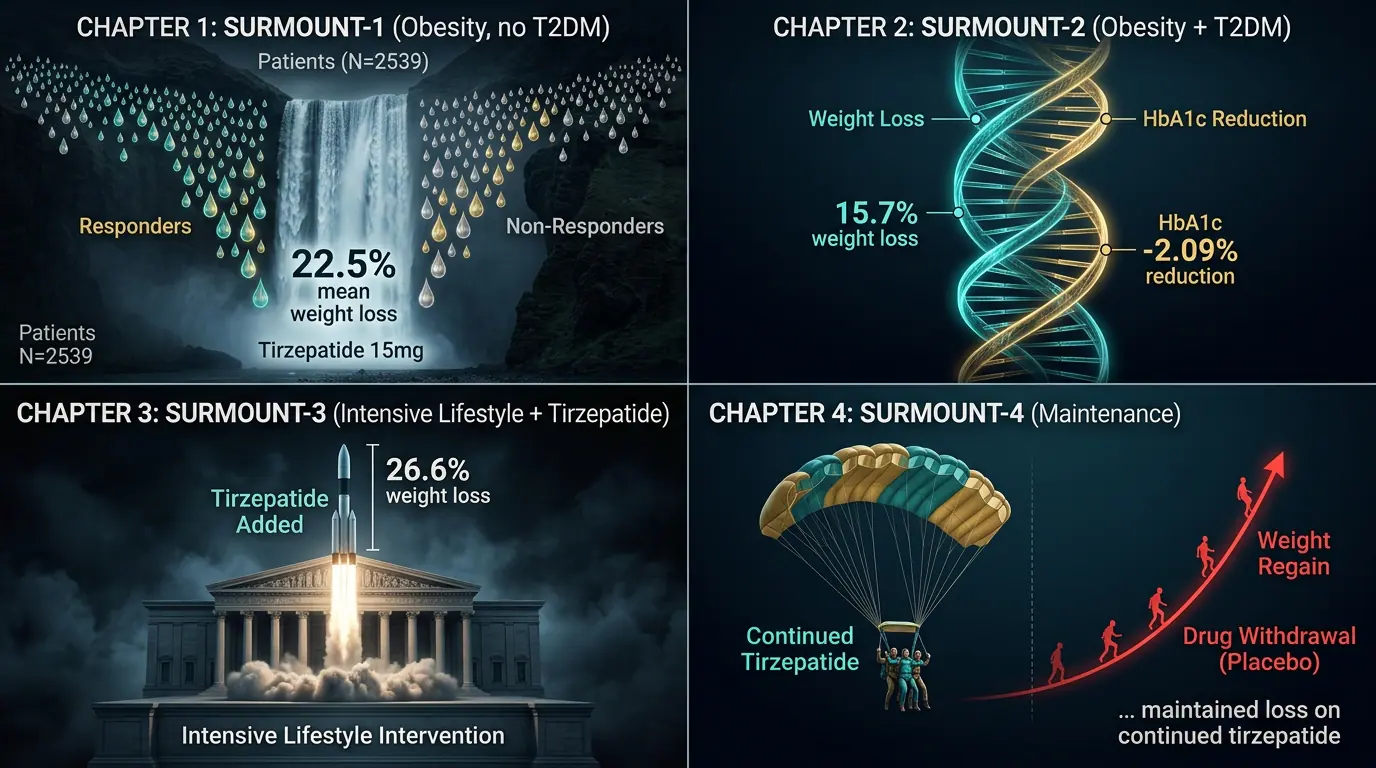
After a 20-week open-label run-in achieving mean −10.6% weight loss, participants were randomised to continue semaglutide 2.4 mg or switch to placebo for 48 weeks. Those continuing lost a further −7.9%; those switched to placebo regained +6.9%. By week 68, the between-group difference was +14.8 kg — nearly fully reversing achieved weight loss. CV risk factors similarly reverted. This trial established beyond doubt that GLP-1 RA obesity therapy requires indefinite continuation to maintain outcomes — analogous to antihypertensive or statin therapy — with profound implications for NICE commissioning criteria, NHS access policy, and patient counselling on treatment chronicity.
Continued (48 wks)
−7.9%
Further loss from randomisation
Total −17.4% from baseline
Withdrawn (48 wks)
+6.9%
Regain from randomisation
Total −5% from baseline
Gap at 68 wks
+14.8 kg
Between groups at end
Chronic therapy required
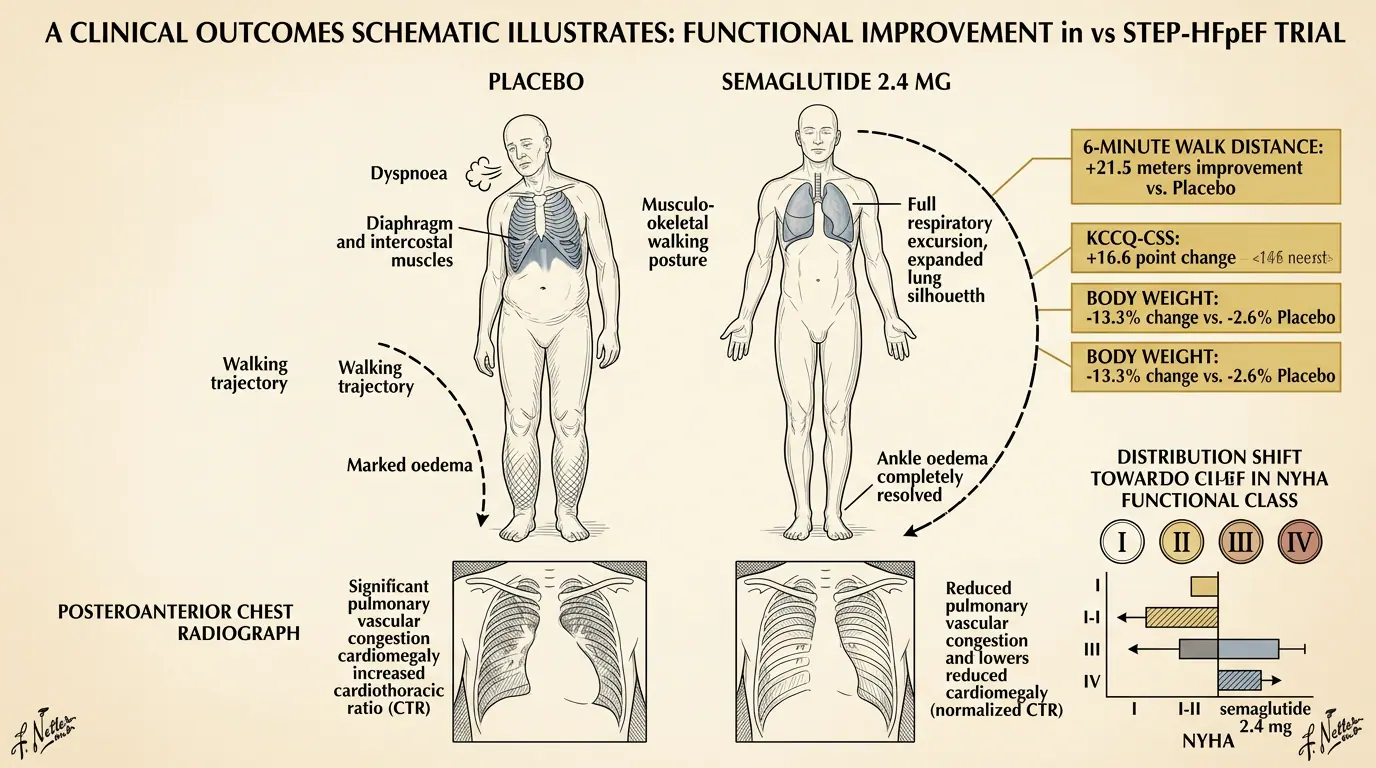
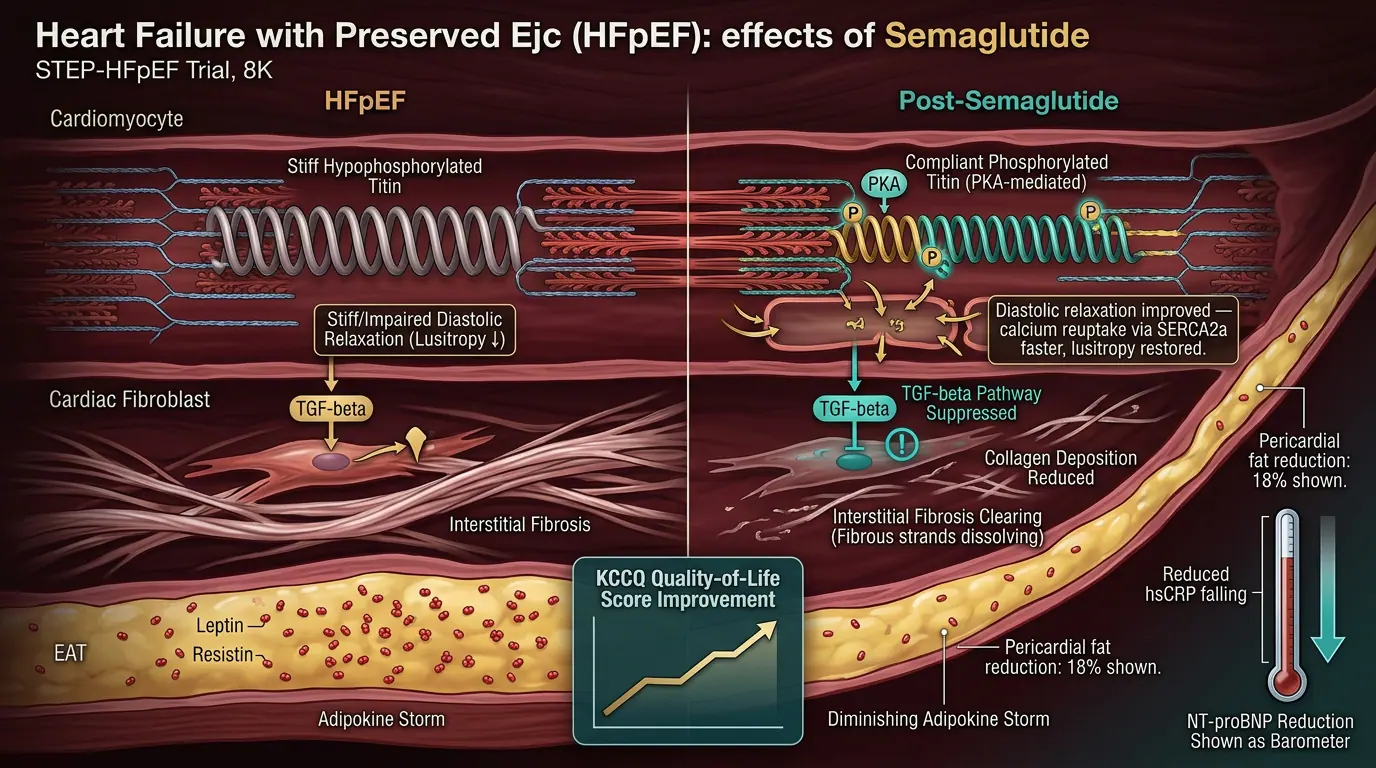
STEP-HFpEF
Semaglutide 2.4 mg in Obesity-Related HFpEF · NEJM 2023
Heart failure Novel indication n=529 · 52 weeks
+7.8 pts
KCCQ-CSS improvement
👥 529
52 weeks
📍 HFpEF (EF ≥45%) + BMI ≥30 · No T2DM
🆚 Placebo
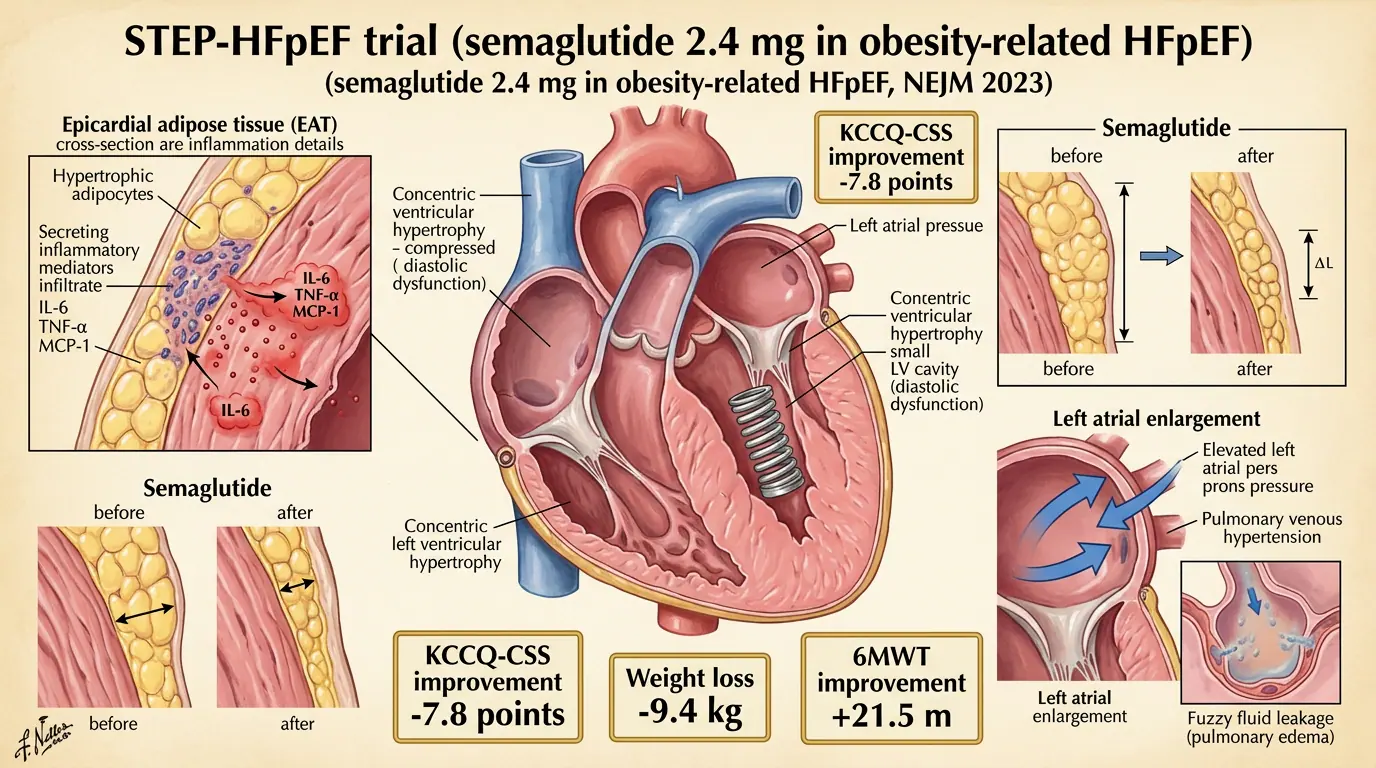
The first dedicated GLP-1 RA heart failure trial in non-diabetic obesity with HFpEF. Both co-primary endpoints were significantly improved: KCCQ-CSS +7.8 vs +4.3 points (quality of life; p=0.003) and 6MWD +21.5 vs +1.2 metres (p<0.001). Weight loss was −13.3% vs −2.6%. CRP fell 43% vs 7% — a strong anti-inflammatory signal. NT-proBNP trended favourably. Mechanisms likely include weight-mediated preload reduction (improving diastolic filling), anti-inflammatory effects on epicardial adipose tissue, and possible direct myocardial GLP-1R signalling. The companion STEP-HFpEF-DM trial (T2DM+HFpEF) produced comparable improvements (+6.3 KCCQ, +14 m 6MWD, p<0.001), establishing the benefit class across diabetic and non-diabetic HFpEF.
KCCQ-CSS
+7.8 pts
vs +4.3 placebo · 52 wks
p=0.003
6-min walk dist.
+21.5 m
vs +1.2 m placebo
p<0.001
CRP reduction
−43%
Anti-inflammatory signal
p<0.001
Tirzepatide Obesity

The SURMOUNT Programme

Tirzepatide in obesity · SURMOUNT 1–5 · 2022–2025

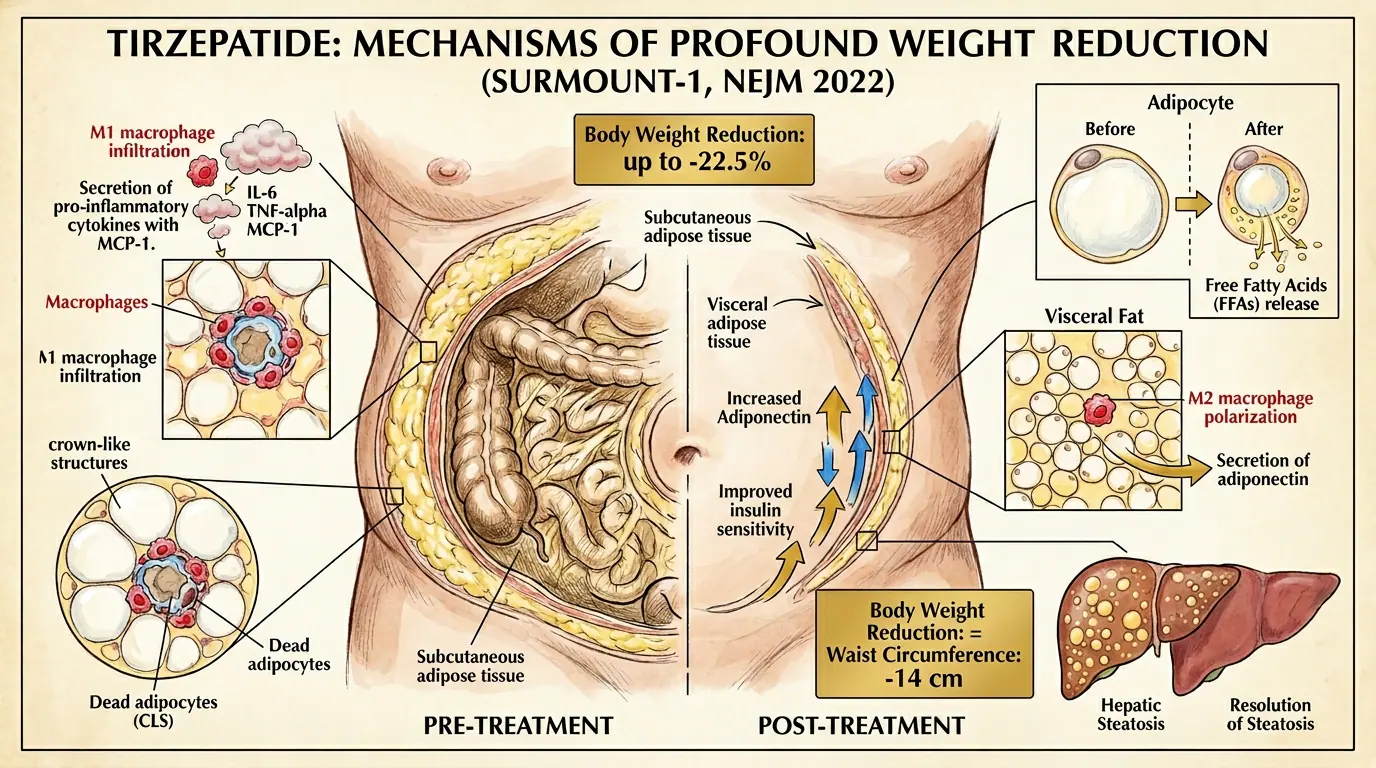
SURMOUNT-1
Tirzepatide vs Placebo in Obesity Without T2DM · NEJM 2022 · Jastreboff et al.
Obesity · No T2DM Record: −22.5% observed n=2,539 · 72 weeks
−20.9%
ITT weight loss (15 mg)
👥 2,539
72 weeks
🆚 Placebo + lifestyle
📍 BMI ≥30 or ≥27 + comorbidity · No T2DM
PopulationAdults with BMI ≥30 or ≥27 + ≥1 weight-related comorbidity. No T2DM. Mean weight 104.8 kg, BMI 38.0 kg/m².
InterventionTirzepatide 5 mg, 10 mg, or 15 mg SC weekly (titrated from 2.5 mg over 20 weeks)
ComparatorPlacebo + lifestyle counselling
OutcomesCo-primary: % weight change at 72 weeks; proportion ≥5% reduction. Key secondary: ≥10%, ≥15%, ≥20%, ≥25% thresholds; cardiometabolic markers; prediabetes remission.
SURMOUNT-1 set a new pharmacological record for weight loss. Mean −20.9% (ITT) at 15 mg vs −3.1% placebo over 72 weeks; observed-case analysis: −22.5%. The dose-response was steep and clear: 5 mg (−15.0%), 10 mg (−19.5%), 15 mg (−20.9%). 37% of participants on 15 mg lost ≥25% body weight — a threshold previously associated only with bariatric surgery — and 18% lost ≥30%. Waist circumference fell −14.4 cm. Prediabetes remission in 95% of those with pre-existing prediabetes. HOMA-IR fell 46%. GI adverse effects (nausea 31%, diarrhoea 24%, vomiting 19%) were predominantly transient during titration; 4.5% discontinued due to GI events at 15 mg.
Weight loss (15 mg)
−20.9%
vs −3.1% placebo · 72 weeks
p<0.001
≥25% weight loss
37%
Tirz 15 mg vs 1% placebo
Bariatric benchmark
Prediabetes remission
95%
Of those with pre-existing prediabetes
15 mg arm
💡
Comparing SURMOUNT-1 to STEP-1
SURMOUNT-1 ran 4 weeks longer (72 vs 68 weeks) and enrolled slightly heavier patients than STEP-1. Direct cross-trial comparison is imperfect. Real-world and indirect comparison data consistently show tirzepatide produces approximately 5–7% greater weight loss than semaglutide at equivalent treatment duration — equivalent to an additional ~5–7 kg on a 100 kg patient, which is clinically meaningful for comorbidity management.
SURMOUNT-3
Tirzepatide + Intensive Lifestyle Intervention · Lancet 2024
Lifestyle + drug Bariatric-range outcomes n=579
−26.6%
total weight (lifestyle + tirz 15 mg)
👥 579
72-week total (12-wk lifestyle run-in)
🆚 Lifestyle only (after run-in)
After a 12-week intensive lifestyle intervention run-in (achieving mean −6.9% weight loss), participants were randomised to tirzepatide 15 mg or continued lifestyle-only. Tirzepatide produced a further −21.1% weight loss from randomisation, yielding a cumulative −26.6% from original baseline — directly approaching Roux-en-Y gastric bypass outcomes (~25–30%) in a non-surgical population. The lifestyle run-in appeared to prime pharmacotherapy response, consistent with the hypothesis that dietary optimisation reduces leptin resistance and may improve hypothalamic GLP-1R sensitivity. This design informs future clinical practice: structured lifestyle preparation before pharmacotherapy initiation may maximise outcomes.
Total weight loss
−26.6%
From original baseline · Lifestyle + tirz
Bariatric range
Drug phase alone
−21.1%
From randomisation
p<0.001
Lifestyle only
−3.0%
From randomisation (control arm)
vs −21.1% drug
CV Outcomes Trial

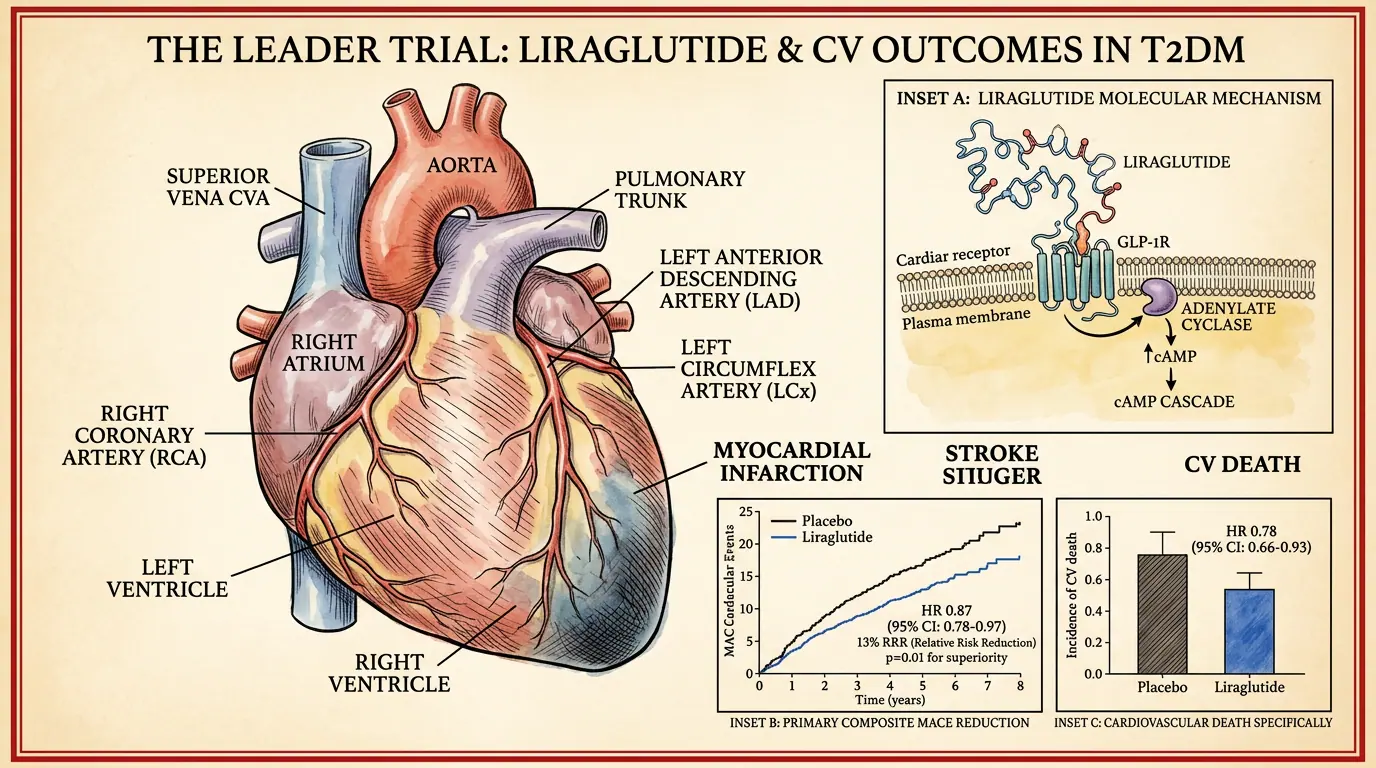
LEADER — First GLP-1 RA CV Superiority

Liraglutide 1.8 mg · NEJM 2016 · n=9,340 · 3.8 years

LEADER
Liraglutide Effect and Action in Diabetes: Evaluation of Cardiovascular Outcome Results · NEJM 2016 · Marso et al.
CV Superiority ✓ n=9,340 Liraglutide 1.8 mg 3.8 yr median
HR 0.87
MACE · p=0.01 superiority
👥 9,340
3.8 years median
🆚 Placebo + SOC
📍 T2DM · ≥50 yr + established CVD or ≥60 yr + CV risk factor
PopulationAdults ≥50 with T2DM (HbA1c ≥7%) + established CVD, or ≥60 years + ≥1 CV risk factor. Mean age 64.3 yr, 81% established CVD.
InterventionLiraglutide 1.8 mg SC once daily (titrated from 0.6 mg)
ComparatorPlacebo + standard-of-care glucose-lowering therapy
OutcomesPrimary: 3-pt MACE (CV death, non-fatal MI, non-fatal stroke). Secondary: components, all-cause mortality, HF hospitalisation, renal composite.
LEADER was the first GLP-1 RA trial to demonstrate statistically significant cardiovascular superiority. The 13% relative MACE reduction (HR 0.87, p=0.01) was driven primarily by a 22% reduction in CV death (HR 0.78, 95% CI 0.66–0.93, p=0.007) — the most clinically critical component. All-cause mortality was reduced by 15% (HR 0.85, p=0.02). The renal composite (new macroalbuminuria, doubling creatinine, ESRD, renal death) fell by 22% (HR 0.78, p=0.003). Non-fatal MI showed a favourable trend (HR 0.88, NS). Critically, the CV death reduction was the primary driver — and this specific benefit (CV mortality rather than just event reduction) distinguished LEADER from many other cardiovascular trials.
3-pt MACE
HR 0.87
95% CI 0.78–0.97 · 3.8 yr
p=0.01 superiority
CV death
HR 0.78
−22% relative reduction
p=0.007
All-cause mortality
HR 0.85
−15% relative reduction
p=0.02
The MACE benefit was consistent across age, sex, geographic region, baseline HbA1c, renal function (including eGFR 15–60), and concomitant medications. The benefit was numerically larger in established CVD subgroup (HR 0.83) vs risk factors only (HR 0.98) — the "secondary prevention enrichment" pattern replicated in later CVOTs. Patients on metformin, insulin, and SGLT2i backgrounds all derived consistent cardiovascular benefit from adding liraglutide.
CV Outcomes Trial

SUSTAIN-6 — Largest Relative MACE Reduction

SUSTAIN-6
Trial to Evaluate CV and Other Long-Term Outcomes with Semaglutide in T2DM · NEJM 2016 · Marso et al.
CV Superiority ✓ n=3,297 Retinopathy signal ⚠
HR 0.74
MACE · −26% RRR · p=0.02
👥 3,297
2.1 years median
🆚 Placebo + SOC
📍 T2DM · High CV risk
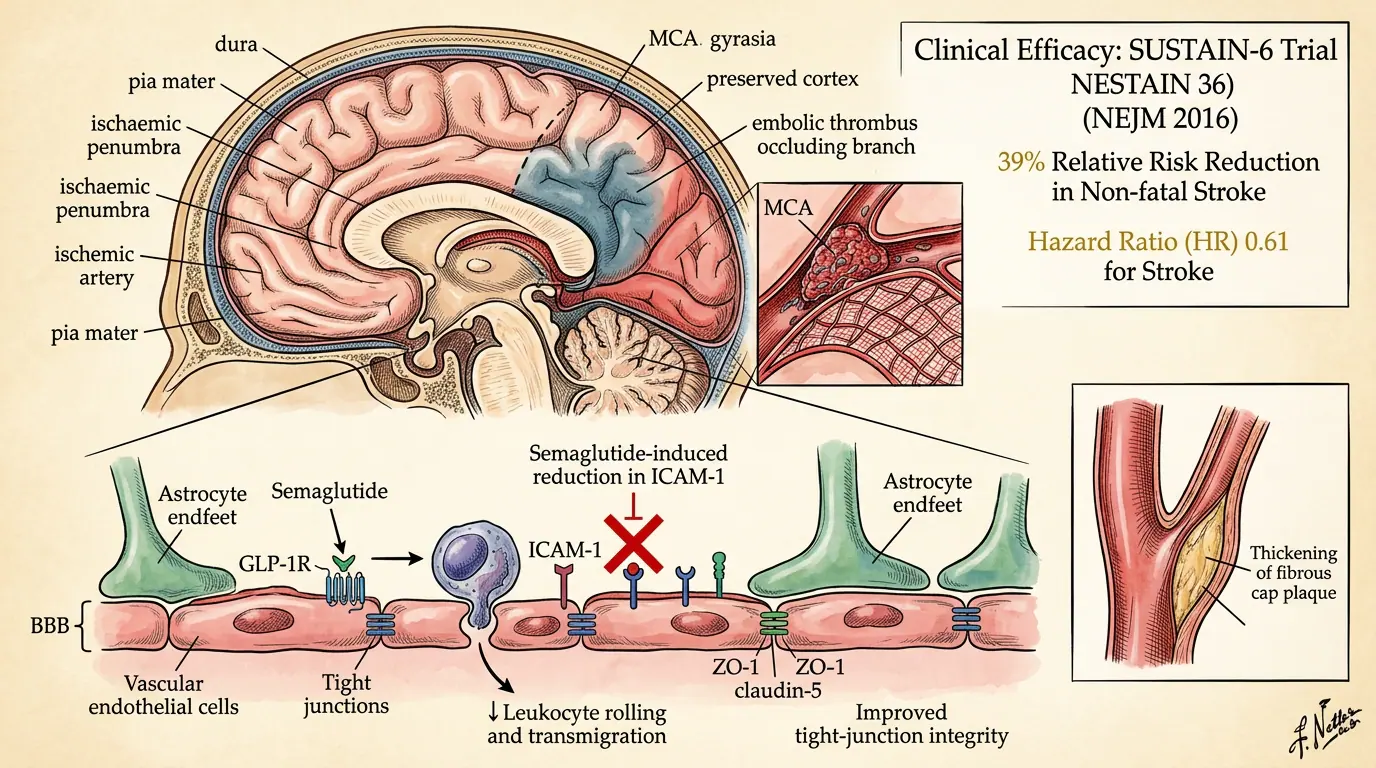
Designed as a regulatory safety (non-inferiority) trial, SUSTAIN-6 unexpectedly delivered statistically significant superiority — and the largest relative MACE reduction of any GLP-1 RA CVOT (HR 0.74, −26%). The primary driver was non-fatal stroke (HR 0.61, −39%) — the strongest anti-stroke signal in the class — and non-fatal MI (HR 0.74). However, diabetic retinopathy complications were significantly increased (HR 1.76, 3.0% vs 1.8%). Rapid improvement in glucose control can temporarily worsen diabetic retinopathy. Current UK product information gives warnings and monitoring advice; pre-existing retinopathy is not presented here as a universal class contraindication. Review the product-specific SmPC and arrange appropriate ophthalmic assessment.
3-pt MACE
HR 0.74
95% CI 0.58–0.95 · p=0.02
Largest RRR in class
Non-fatal stroke
HR 0.61
−39% · Strongest stroke signal
p=0.04
Retinopathy ⚠
HR 1.76
3.0% vs 1.8% · Screen first
Rapid HbA1c drop
Retinopathy Signal — Clinical Practice Implication
The SUSTAIN-6 retinopathy signal (HR 1.76) is mechanistically explained by rapid glucose normalisation in patients with pre-existing retinopathy — worsening macular oedema and cotton-wool spots through paradoxical retinal autoregulation disruption. NICE NG28 recommends retinal screening before semaglutide initiation in T2DM patients with pre-existing retinal disease. The signal was not replicated in LEADER (liraglutide) or SELECT (non-diabetic population), and appears specific to the speed of HbA1c reduction rather than a class-wide effect. For clinical practice: obtain ophthalmology review in patients with known proliferative or pre-proliferative retinopathy before initiating semaglutide.
Landmark Trial 2023

SELECT — The Trial That Changed Everything

Semaglutide 2.4 mg in non-diabetic obesity · NEJM 2023 · n=17,604

Why SELECT is the Most Important GLP-1 RA Trial
SELECT proved for the first time that pharmacological weight loss reduces cardiovascular events in people without diabetes — repositioning obesity from a risk factor to a treatable cardiovascular disease in its own right. Its results underpinned MHRA approval expansion, NICE Wegovy access decisions, and AHA/ACC 2024 guideline updates positioning GLP-1 RAs as primary-prevention cardiometabolic agents. The incidental finding of 73% reduction in new-onset T2DM opened an entirely new indication in diabetes prevention.
SELECT
Semaglutide Effects on CV Outcomes in People with Overweight or Obesity · NEJM 2023 · Lincoff et al.
CV Superiority ✓ Non-diabetic population n=17,604 · 39.8 months
HR 0.80
MACE · p<0.001
👥 17,604
39.8 months median
🆚 Placebo + SOC
📍 BMI ≥27 + established CVD · No T2DM
PopulationAdults ≥45 years with BMI ≥27 kg/m², established CVD (prior MI, stroke, or symptomatic PAD), without T2DM (HbA1c <6.5%). Mean BMI 33.4, age 61.3 yr. 73% with prior MI or stroke.
InterventionSemaglutide 2.4 mg SC weekly (16-week Wegovy titration schedule)
ComparatorPlacebo SC weekly + standard of care
OutcomesPrimary: 3-pt MACE (CV death, non-fatal MI, non-fatal stroke). Pre-specified secondary: components, HF hospitalisation, AF, new-onset T2DM, renal, all-cause mortality.
SELECT enrolled the largest-ever CVOT cohort. Primary endpoint: 20% relative MACE reduction (HR 0.80, 95% CI 0.72–0.90, p<0.001). Absolute risk reduction: 1.5% (6.5% vs 8.0%), NNT ~67 over 40 months to prevent one MACE event. Weight loss was 9.4% vs 0.9% at 104 weeks. All three MACE components favoured semaglutide: non-fatal MI (HR 0.72, CI 0.61–0.85, p<0.001) was the strongest signal; CV death trended (HR 0.85, CI 0.71–1.01); non-fatal stroke was non-significant (HR 0.93). The benefit was consistent across BMI subgroups (HR ~0.80 whether BMI 27–30 or ≥35), arguing that direct anti-inflammatory and vascular mechanisms operate independently of weight loss magnitude.
3-pt MACE
HR 0.80
95% CI 0.72–0.90 · p<0.001
NNT ~67 over 40 months
Non-fatal MI
HR 0.72
95% CI 0.61–0.85
p<0.001
HF hospitalisation
HR 0.82
95% CI 0.71–0.96
p=0.009
New-onset T2DM
−73%
HR 0.27 · 1.9% vs 6.9%
p<0.001
Weight loss
−9.4%
vs −0.9% placebo · 104 weeks
p<0.001
eGFR preservation
Less decline
Renal function preservation signal
Secondary analysis
CV Outcomes Trials

REWIND, EXSCEL & ELIXA

REWIND
Researching CV Events with a Weekly Incretin in Diabetes · Lancet 2019 · Gerstein et al.
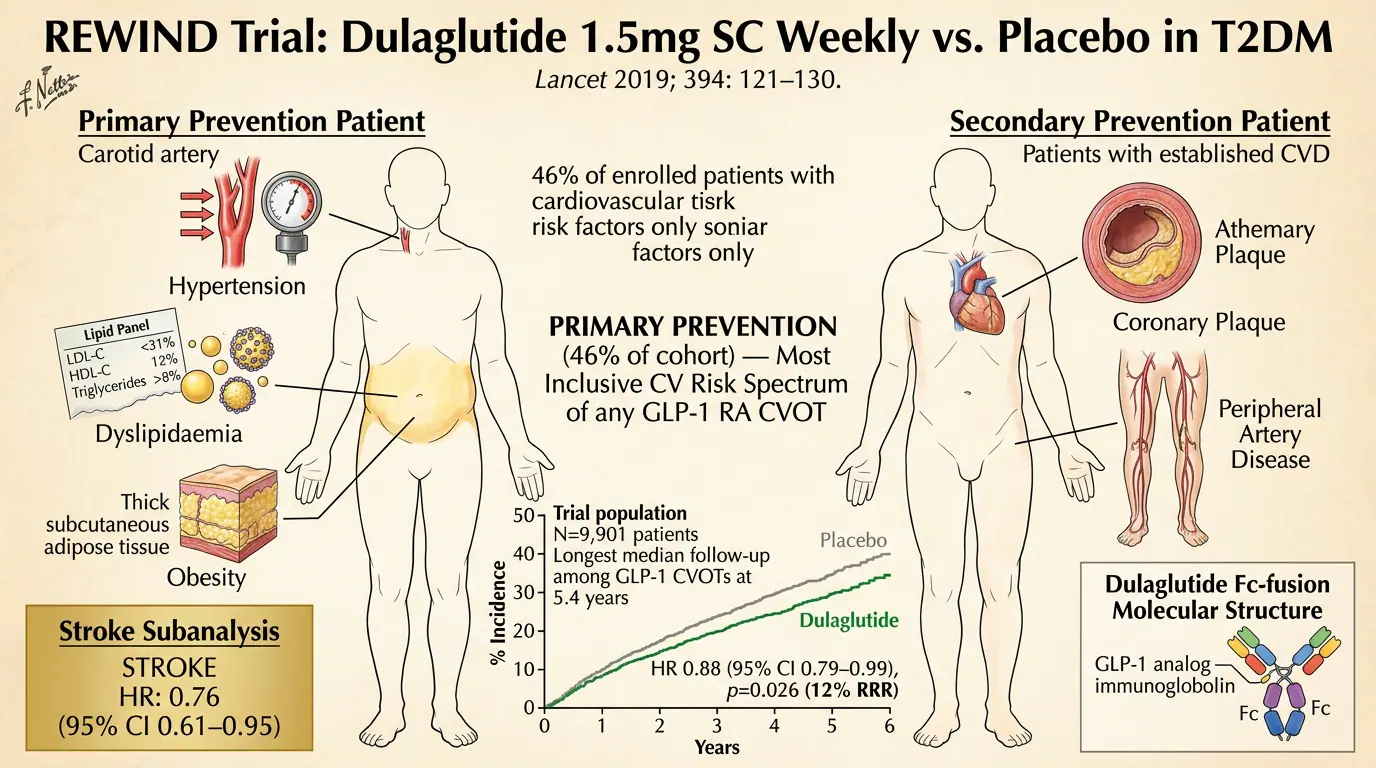
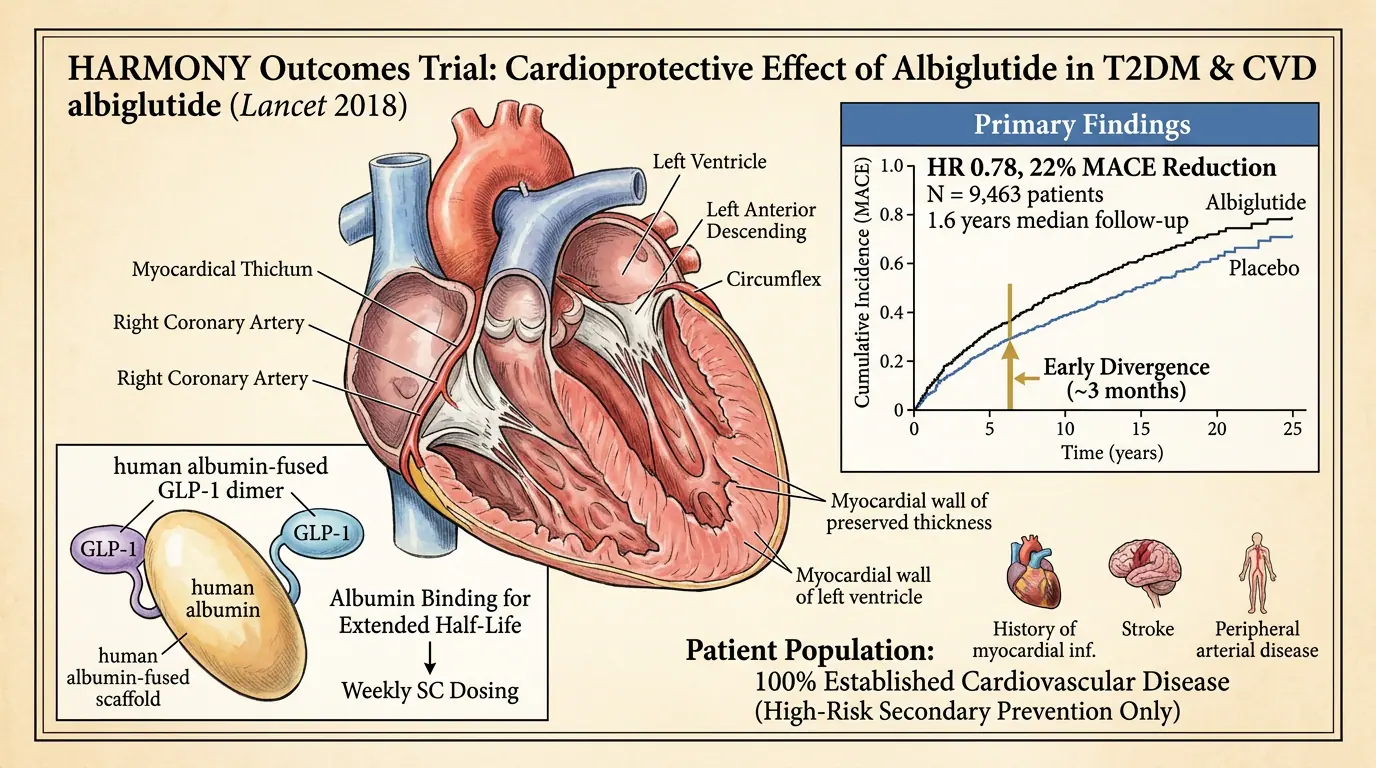
CV Superiority ✓ n=9,901 · 5.4 yr 69% primary prevention
HR 0.88
MACE · p=0.026
👥 9,901
5.4 years (longest CVOT)
📍 T2DM · 31% secondary, 69% primary prevention
REWIND is the most demographically broad and clinically generalisable GLP-1 RA CVOT — only 31% had established CVD at baseline (vs 81% LEADER, 83% SELECT), making it the most applicable to typical outpatient T2DM populations without established disease. MACE reduced 12% (HR 0.88, p=0.026). Primary driver was non-fatal stroke (HR 0.76, −24%) — second only to SUSTAIN-6's stroke signal. Non-fatal MI was not significantly reduced (HR 0.96). The 5.4-year follow-up — the longest of any GLP-1 RA CVOT — also provided the most durable evidence for sustained CV benefit. Renal composite also improved (HR 0.85, p=0.004).
3-pt MACE
HR 0.88
95% CI 0.79–0.99 · 5.4 yr
p=0.026
Non-fatal stroke
HR 0.76
Second strongest stroke signal
p=0.017
Renal composite
HR 0.85
New macroalb. / creatinine / ESRD
p=0.004
EXSCEL & ELIXA
Exenatide QW (NEJM 2017, n=14,752) · Lixisenatide (NEJM 2015, n=6,068) — Neutral CV Outcomes
Non-inferiority only CV benefit NOT a class effect
Neutral
Safety demonstrated only
EXSCEL (exenatide XR, n=14,752, 3.2 years): HR 0.91 (CI 0.83–1.00, p=0.06) — just missing significance for superiority by 0.06 p-value. Post-hoc: prior CVD subgroup HR 0.85. ELIXA (lixisenatide, n=6,068, 2.1 years): HR 1.02 (CI 0.89–1.17) — clearly neutral with no signal. The ELIXA post-ACS population (all enrolled within 180 days of ACS) may represent a ceiling effect where acute coronary mechanisms dominate. The key clinical lesson: CV benefit is NOT a class-wide property of all GLP-1 RAs — it is drug-specific and most robustly demonstrated with semaglutide (SC and oral), liraglutide, and dulaglutide.
EXSCEL MACE
HR 0.91
95% CI 0.83–1.00 · p=0.06
Near-miss for superiority
ELIXA MACE
HR 1.02
95% CI 0.89–1.17 · p=0.81
Truly neutral
Class implication
Drug-specific
Short-acting agents have weaker or absent CV benefit
Choose sema / lira / dula
Renal Outcomes Trial 2024

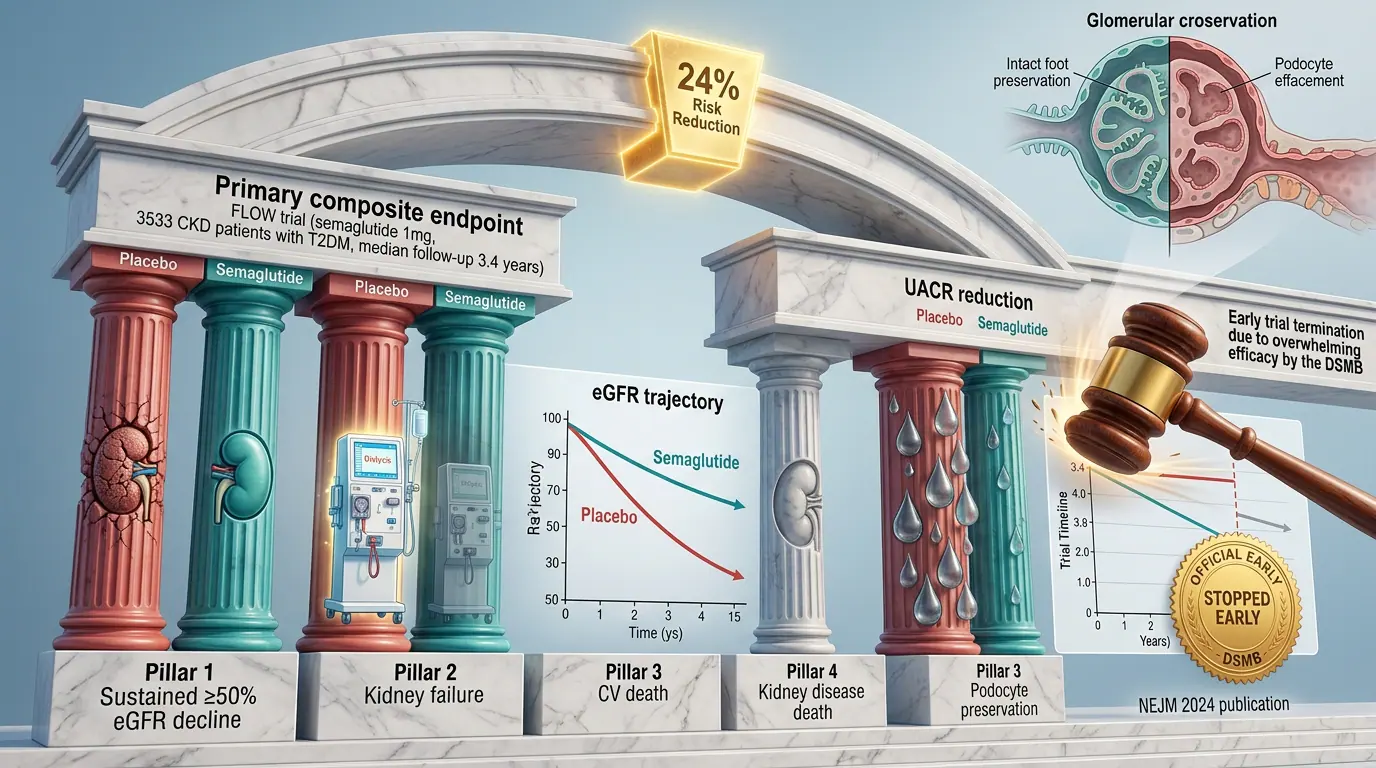
FLOW — First Dedicated Renal Outcomes Trial

Semaglutide 1 mg in T2DM + CKD · NEJM 2024 · Stopped early for efficacy

FLOW
Evaluate Renal Function with Semaglutide Once Weekly in People with T2DM and CKD · NEJM 2024 · Perkovic et al.
Renal Superiority ✓ Stopped early — efficacy n=3,533 · 3.8 yr median
HR 0.76
Renal composite · p=0.0003
👥 3,533
3.8 yr median (stopped early)
🆚 Placebo + SOC (SGLT2i allowed)
📍 T2DM · eGFR 25–75 · UACR ≥100
PopulationAdults with T2DM and CKD: eGFR 25–75 mL/min/1.73m² AND UACR ≥100 mg/g. Mean eGFR 47.2, UACR 567 mg/g. ~15% on SGLT2i at baseline.
InterventionSemaglutide 1 mg SC weekly
ComparatorPlacebo + standard care (RAAS blockade required; SGLT2 inhibitors permitted)
OutcomesPrimary kidney composite: sustained ≥50% eGFR decline, ESRD, renal death, or CV death. Key secondary: eGFR slope, UACR, MACE, all-cause mortality.
FLOW was stopped early by its independent Data Monitoring Committee after a pre-specified interim analysis demonstrated overwhelming efficacy well before the planned event threshold — one of the strongest efficacy signals ever triggering early stopping in a renal outcomes trial. Primary kidney composite reduced by 24% (HR 0.76, 95% CI 0.66–0.88, p=0.0003). Individual components all favoured semaglutide: sustained ≥50% eGFR decline (HR 0.70), ESRD (HR 0.80). All-cause mortality reduced 20% (HR 0.80, 95% CI 0.67–0.95, p=0.01). The eGFR slope was −2.19 vs −3.36 mL/min/1.73m²/year — a 35% slowing in rate of progression. UACR fell 24%.
Renal composite
HR 0.76
95% CI 0.66–0.88 · p=0.0003
Trial stopped early
All-cause mortality
HR 0.80
95% CI 0.67–0.95
p=0.01
eGFR slope
−2.19
vs −3.36 mL/min/yr · 35% slower
p<0.001
The kidney composite benefit was consistent in those on background SGLT2i (HR 0.78, CI 0.62–0.99) and those not (HR 0.75, CI 0.63–0.91), with no significant interaction (p=0.76). This provides robust evidence that semaglutide and SGLT2 inhibitors provide additive — not redundant — renal protection. KDIGO 2024 and NICE NG28 now recommend both classes together in T2DM with CKD where tolerated.
Heart Failure

Heart Failure Evidence

STEP-HFpEF · STEP-HFpEF-DM · ongoing outcomes trials

The STEP-HFpEF programme (covered in the STEP section above) established meaningful quality-of-life and functional benefits in HFpEF with obesity. Key points: both diabetic (STEP-HFpEF-DM) and non-diabetic (STEP-HFpEF) HFpEF cohorts benefited consistently. The mechanism involves weight-mediated preload reduction (improving diastolic filling), epicardial adipose tissue reduction (reducing pro-inflammatory cytokine secretion), and possible direct myocardial GLP-1R signalling. A dedicated powered HFpEF outcomes trial (SOUL-HF) with semaglutide is now underway. Notably, GLP-1 RAs should be used cautiously in HFrEF (ejection fraction <40%) — the theoretical mild chronotropic effect (+2–4 bpm) may be less well tolerated — though no harm signal has been established in existing trials.

📊
HFpEF Key Numbers Across Both STEP-HFpEF Trials
STEP-HFpEF (no T2DM, n=529): KCCQ-CSS +7.8 pts, 6MWD +21.5 m, weight −13.3%, CRP −43%, all p<0.01. STEP-HFpEF-DM (T2DM, n=616): KCCQ-CSS +6.3 pts, 6MWD +14.3 m, weight −9.8%. The magnitude of benefit was slightly attenuated in the diabetic cohort — consistent with diabetes-related blunting of GLP-1 RA weight loss — but remained clinically meaningful and statistically significant across both endpoints in both trials. These results position semaglutide 2.4 mg as a disease-modifying pharmacotherapy for obesity-related HFpEF pending outcomes trial data.
Hepatic Outcomes

MASH & NAFLD Trials

SYNERGY-NASH · LEAN · GLP-1 RA liver histology evidence

SYNERGY-NASH
Tirzepatide vs Placebo in MASH with Moderate-to-Advanced Fibrosis · Lancet 2024 · Loomba et al.
MASH histology ✓ 62–74% resolution n=190 · 52 weeks · Biopsy
74%
MASH resolution (15 mg)
👥 190
52 weeks · Liver biopsy confirmed
📍 MASH F2–F3 fibrosis
🆚 Placebo
Biopsy-confirmed MASH with fibrosis stage F2–F3. Tirzepatide 10 mg and 15 mg produced MASH resolution (NAS score reduction with no fibrosis worsening) in 62% (10 mg) and 74% (15 mg) vs 10% placebo. Fibrosis improvement by ≥1 stage: 55% and 51% vs 30% placebo. Weight loss was −14.2% and −16.8%. These results rival resmetirom (Rezdiffra, THRβ agonist, ~26% MASH resolution) while also providing systemic metabolic benefits — no hepatic-targeted drug achieves concurrent weight loss, glycaemic improvement, and histological MASH benefit. An FDA application for tirzepatide in MASH indication was submitted 2024 with priority review granted. A Phase 3 MASH outcomes trial is now underway.
MASH resolution (15 mg)
74%
vs 10% placebo · Biopsy-confirmed
p<0.001
Fibrosis improvement
51%
≥1 fibrosis stage · 15 mg
p=0.003
Weight loss
−16.8%
15 mg · 52 weeks
p<0.001
📊
LEAN Trial — Liraglutide in NASH
The earlier LEAN trial (Lancet 2016, n=52, liraglutide 1.8 mg, 48 weeks) showed NASH resolution in 39% vs 9% placebo on biopsy — providing the first proof-of-concept that GLP-1 RAs can produce histological liver improvement. LEAN was underpowered but established the mechanistic rationale pursued in SYNERGY-NASH. The dramatically larger effect sizes with tirzepatide vs liraglutide in MASH likely reflect the substantially greater weight loss with dual GIP/GLP-1 agonism, combined with possible direct GIPR-mediated hepatic lipid metabolism effects.
Emerging Indications

Neurological & Addiction Evidence

SPARK · EVOKE · Addiction trials · 2024–2026

SPARK
Liraglutide in Parkinson's Disease · Lancet 2024 · Meissner et al. · University College London
Parkinson's disease Disease-modifying signal Phase 2 · n=156
Positive
DaT SPECT preservation · p=0.03
👥 156
12 months + 6-month washout
🆚 Placebo
📍 Early Parkinson's disease
SPARK is the most important neurological GLP-1 RA trial published. Participants with Parkinson's disease randomised to liraglutide 1.8 mg daily or placebo for 12 months (followed by 6-month washout). Primary endpoint — dopamine transporter (DaT) SPECT imaging (objective measure of nigrostriatal dopaminergic neuronal integrity) — showed significantly less decline in liraglutide-treated patients (p=0.03). Clinical motor scores (MDS-UPDRS-III) showed a non-significant trend favouring liraglutide (underpowered for this endpoint). CSF biomarkers of neuroinflammation (IL-6, TNF-α) were reduced. Critically, the 6-month washout analysis showed preserved benefit after discontinuation — consistent with a disease-modifying rather than purely symptomatic mechanism. This is the first randomised evidence of a potentially disease-modifying pharmacotherapy for Parkinson's disease in two decades, initiating global Phase 3 trial planning.
DaT SPECT
Preserved
Less nigrostriatal decline vs placebo
p=0.03
UPDRS-III trend
NS trend
Motor score favoured liraglutide
p=0.18 (underpowered)
Neuroinflammation
Reduced
CSF IL-6 and TNF-α lowered
p<0.05
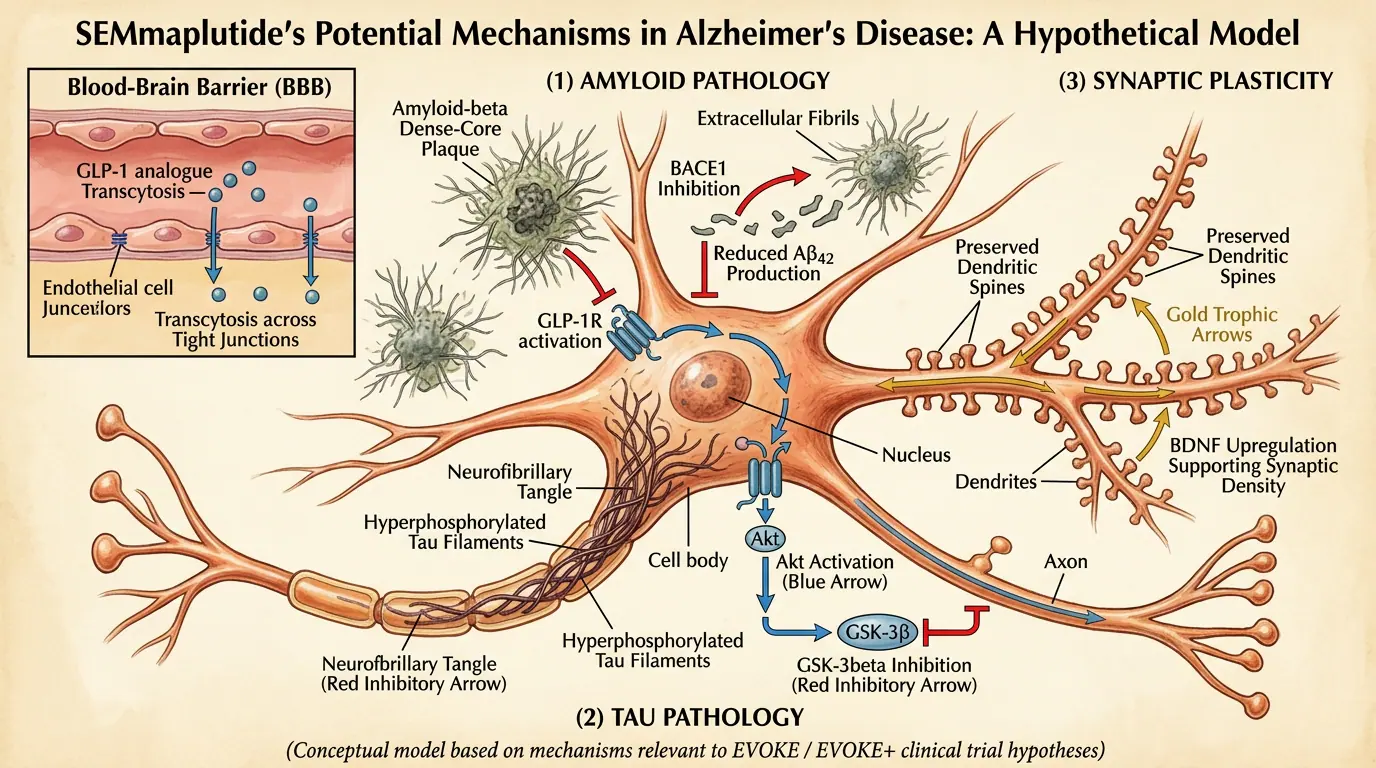
EVOKE & EVOKE+
Semaglutide in Early Alzheimer's Disease · Phase 3 · n=1,840 · Results reported 2025
Alzheimer's disease Phase 3 — reported 2025 See published EVOKE data
Reported
Results 2025
👥 1,840 combined
24 months · Sema SC 1 mg weekly
📍 Early AD / MCI · Biomarker-confirmed
EVOKE and EVOKE+ are twin Phase 3 trials of semaglutide 1 mg SC weekly in early Alzheimer's disease (MCI or mild dementia with AD biomarkers confirmed by imaging or CSF). Enrolling 1,840 participants across 7 countries, these are the largest pharmacological trials in Alzheimer's using a non-amyloid mechanism. Rationale: (1) observational data showing 40–70% lower dementia incidence in GLP-1 RA-treated T2DM cohorts; (2) GLP-1R expression in hippocampus, entorhinal cortex, and prefrontal cortex — regions critical for memory consolidation; (3) anti-neuroinflammatory effects potentially slowing microglial activation; (4) reduced tau pathology in rodent models. Primary endpoint: CDR-SB change at 24 months. Results were reported in 2025 — refer to the published EVOKE trial data and peer-reviewed outcomes for the full efficacy and safety profile. The observational signal (lower dementia incidence in GLP-1 RA users) and mechanistic rationale remain of substantial clinical interest regardless of Phase 3 outcomes.
Population
MCI/Early AD
Biomarker-confirmed · 7 countries
n=1,840 total
Primary endpoint
CDR-SB
Cognitive decline over 24 months
Results reported 2025
Background signal
−40–70%
Lower dementia incidence in GLP-1 RA users
Observational only
🍺
Addiction Medicine — Early Signals
GLP-1R is expressed in the ventral tegmental area and nucleus accumbens — mesolimbic reward circuitry. Preclinical models demonstrate GLP-1 RA suppression of alcohol preference, nicotine seeking, and opioid reward. Phase 2 trials of semaglutide in alcohol use disorder (NCT05520398, n=48) and nicotine dependence are ongoing with early reduction signals. Real-world pharmacovigilance data from GLP-1 RA users report reduced craving for alcohol, tobacco, and recreational drugs — generating substantial academic and commercial interest. Phase 3 addiction medicine programmes are underway, with semaglutide trials in alcohol use disorder and nicotine dependence progressing through 2025–2026.
Reference

Master Trial Reference Table

All major GLP-1 RA trials — chronological with primary outcomes and verdict

TrialYearDrugnPrimary endpointKey resultVerdict
ELIXA2015Lixisenatide6,0683-pt MACEHR 1.02 (0.89–1.17)Neutral
LEADER2016Liraglutide 1.8 mg9,3403-pt MACEHR 0.87 (0.78–0.97) p=0.01CV Superiority ✓
SUSTAIN-62016Semaglutide SC3,2973-pt MACEHR 0.74 (0.58–0.95) p=0.02CV Superiority ✓
SUSTAIN-12017Semaglutide SC 0.5/1 mg388HbA1c change−1.5% (1 mg) vs −0.02% placeboHbA1c landmark
EXSCEL2017Exenatide XR14,7523-pt MACEHR 0.91 (0.83–1.00) p=0.06Non-inferior
SUSTAIN-72018Sema vs Dulaglutide1,201HbA1c · head-to-head−0.40% HbA1c diff; −3.5 kg wt diffSema superior ✓
PIONEER-32019Oral semaglutide 14 mg1,864HbA1c vs sitagliptin−0.5% difference · 78 weeksOral superior
PIONEER-62019Oral semaglutide3,1833-pt MACE (safety)HR 0.79 (0.57–1.11)Non-inferior
REWIND2019Dulaglutide 1.5 mg9,9013-pt MACEHR 0.88 (0.79–0.99) p=0.026CV Superiority ✓
STEP-12021Semaglutide 2.4 mg1,961% weight loss (obesity)−14.9% vs −2.4% placeboObesity landmark
STEP-22021Semaglutide 2.4 mg1,210% weight loss (T2DM)−9.6% vs −3.4% placeboT2DM obesity
STEP-42021Semaglutide 2.4 mg803Weight after withdrawal+6.9% regain on withdrawalChronic therapy
AMPLITUDE-O2021Efpeglenatide4,0763-pt MACEHR 0.73 (0.58–0.92) p=0.0004CV Superiority ✓
SURPASS-22021Tirzepatide vs Sema 1 mg1,879HbA1c vs sema 1 mg−2.37% vs −1.86%; weight −11.2 vs −5.7 kgTirz superior ✓
SUSTAIN-112022Semaglutide 2 mg961HbA1c vs sema 1 mg−2.1% vs −1.9% · basis for 2 mg approvalDose extension
SURMOUNT-12022Tirzepatide2,539% weight loss−20.9% (15 mg) vs −3.1%Weight record ★
SELECT2023Semaglutide 2.4 mg17,6043-pt MACE (no T2DM)HR 0.80 (0.72–0.90) p<0.001CV Superiority ✓ ★
STEP-HFpEF2023Semaglutide 2.4 mg529KCCQ-CSS + 6MWD+7.8 pts; +21.5 m · p<0.01HFpEF benefit
SURMOUNT-32024Tirzepatide 15 mg579Weight (lifestyle + drug)−26.6% total from baselineBariatric range
SOUL2024Oral semaglutide 14 mg9,6503-pt MACE (T2DM+CKD)HR 0.86 (0.75–0.98) p=0.039CV Superiority ✓
FLOW2024Semaglutide 1 mg3,533Renal compositeHR 0.76 (0.66–0.88) p=0.0003Renal superior ✓
SYNERGY-NASH2024Tirzepatide190MASH resolution (biopsy)74% (15 mg) vs 10% placeboMASH landmark
SPARK2024Liraglutide 1.8 mg156DaT SPECT (Parkinson's)Preserved vs placebo · p=0.03Neuro signal
EVOKE / EVOKE+2025Semaglutide 1 mg1,840CDR-SB (Alzheimer's)See published EVOKE resultsReported 2025
TRIUMPH2026 exp.Retatrutide~3,000Weight + CV compositePhase 3 ongoingPending

Trial summaries require verification against the cited publication and current product information. HR = hazard ratio for 3-point MACE vs placebo. RRR = relative risk reduction. SOC = standard of care. T2DM = type 2 diabetes mellitus. MASH = metabolic dysfunction-associated steatohepatitis. CDR-SB = clinical dementia rating sum of boxes. DaT SPECT = dopamine transporter SPECT imaging. CV Superiority ✓ = statistically significant reduction in the stated primary MACE endpoint vs the stated comparator.